
Form Follows Ficus
Architecture Books – Week 8/2026

This newsletter for the week of February 16 finds us pining for the ensuing warmth of spring as we take a look inside Rafael Herrin-Ferri’s latest book, All the Queens Gardens: Everyday Landscaping in New York’s Largest and Most Diverse Borough. The book from the archive is also Queens-related, while the usual headlines and new releases are in between. Happy reading!
Book of the Week
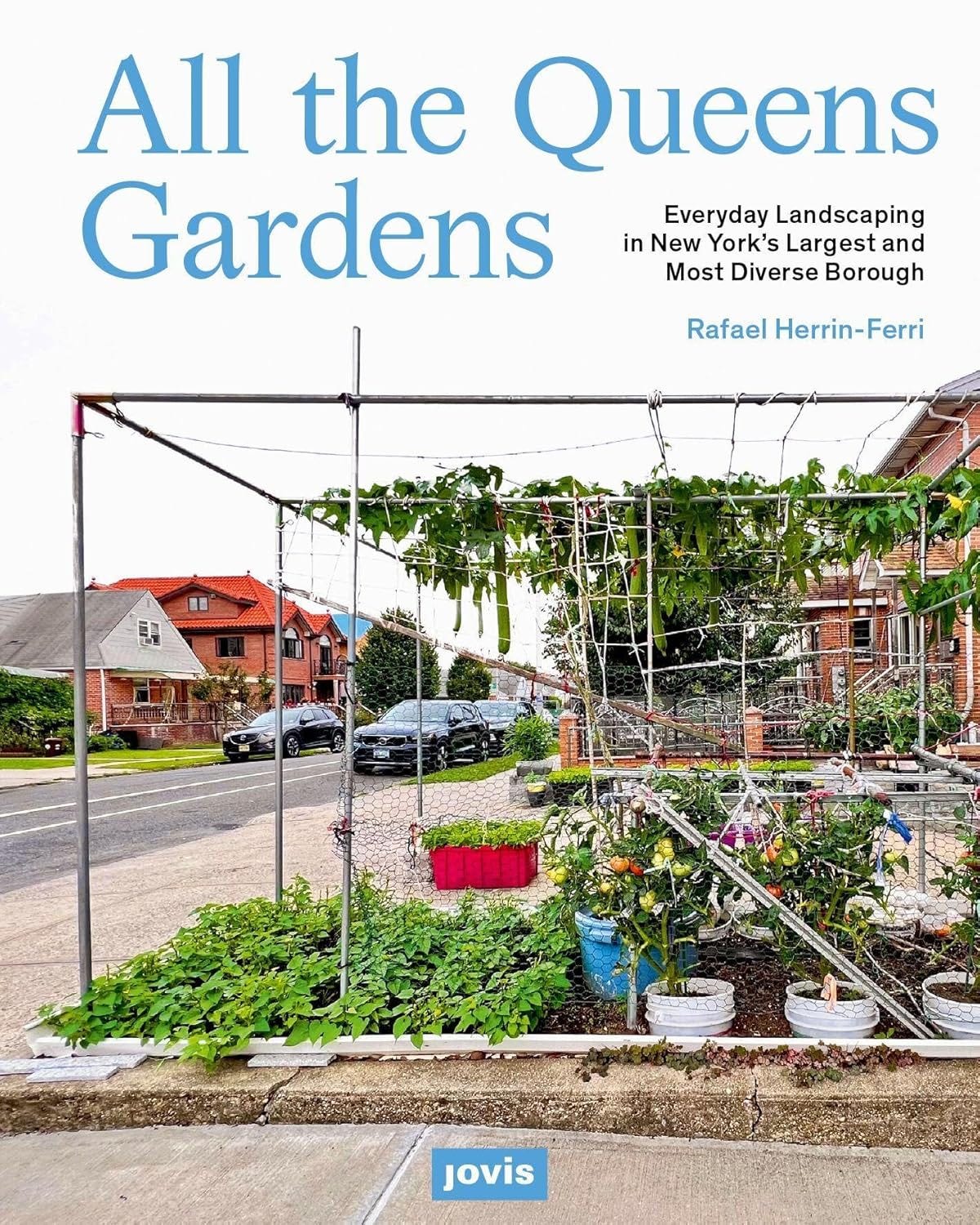
All the Queens Gardens: Everyday Landscaping in New York’s Largest and Most Diverse Borough, by Rafael Herrin-Ferri (Buy from JOVIS / from Amazon / from Bookshop)
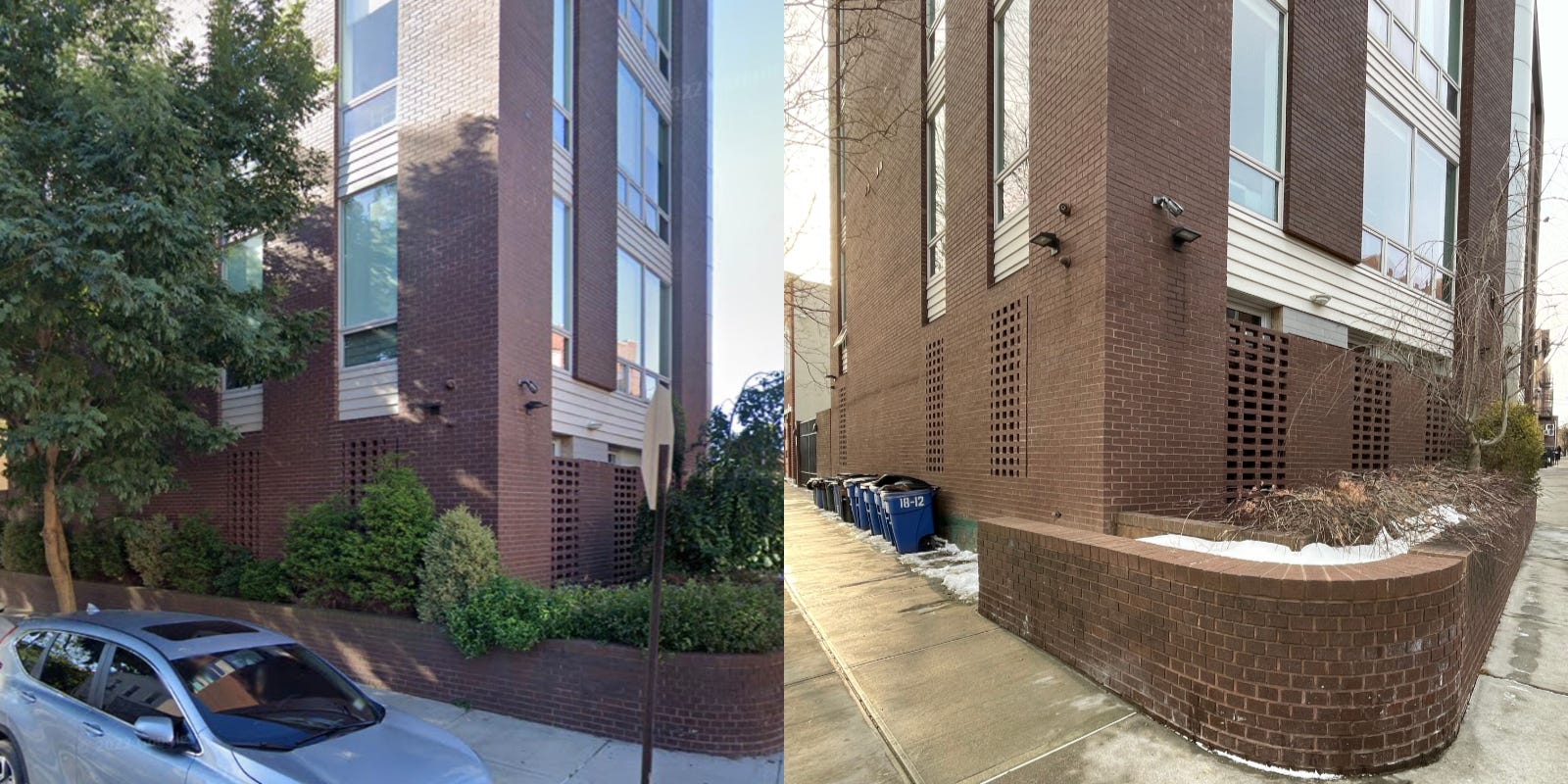
With roughly 8-1/2 million people spread across—or I should say packed into—New York City’s five boroughs, the amount of square feet afforded each NYC resident is around 500 square feet. This is one way of describing how even the smallest of spaces in the city are important, that eventually every bit of leftover or unused space will be occupied or find a use. And with so much area given over to roads, sidewalks, and buildings, many parks and gardens find themselves squeezed into the smallest of spaces, be it pocket parks like Septuagesimo Uno on West 71st Street or a planting bed wrapping the corner of an apartment building in my neighborhood of Astoria, Queens. The latter, seen below, was recently truncated to accommodate garbage bins following the city’s new Residential Waste Containerization rules, which have helped reduce the number of rats in the city but are now forcing a choice on some landlords and residents: garbage or green?
Thoughts of trash occupied part of my mind when I cracked open Rafael Herrin-Ferri’s All the Queens Gardens: Everyday Landscaping in New York’s Largest and Most Diverse Borough, a followup to his 2021 book All the Queens Houses: An Architectural Portrait of New York’s Largest and Most Diverse Borough. Although Queens, unlike Manhattan, does actually have some areas with alleys, they are typically lined with garages rather than dumpsters, so trash is still mainly picked up at the sidewalks in front of buildings. And given that the gardens in Herrin-Ferri’s book are “for the most part street-facing,” I wondered how much the “everyday landscaping” would be impacted by the needs of twice-weekly trash collection. Outside of a few instances, such as the aptly titled “Trash-and-Recycling Tableau” in Woodside, just east of Astoria, I needn’t have worried: the book is full of a diversity of curious and creative gardens that echo the diversity of the “world’s borough.”
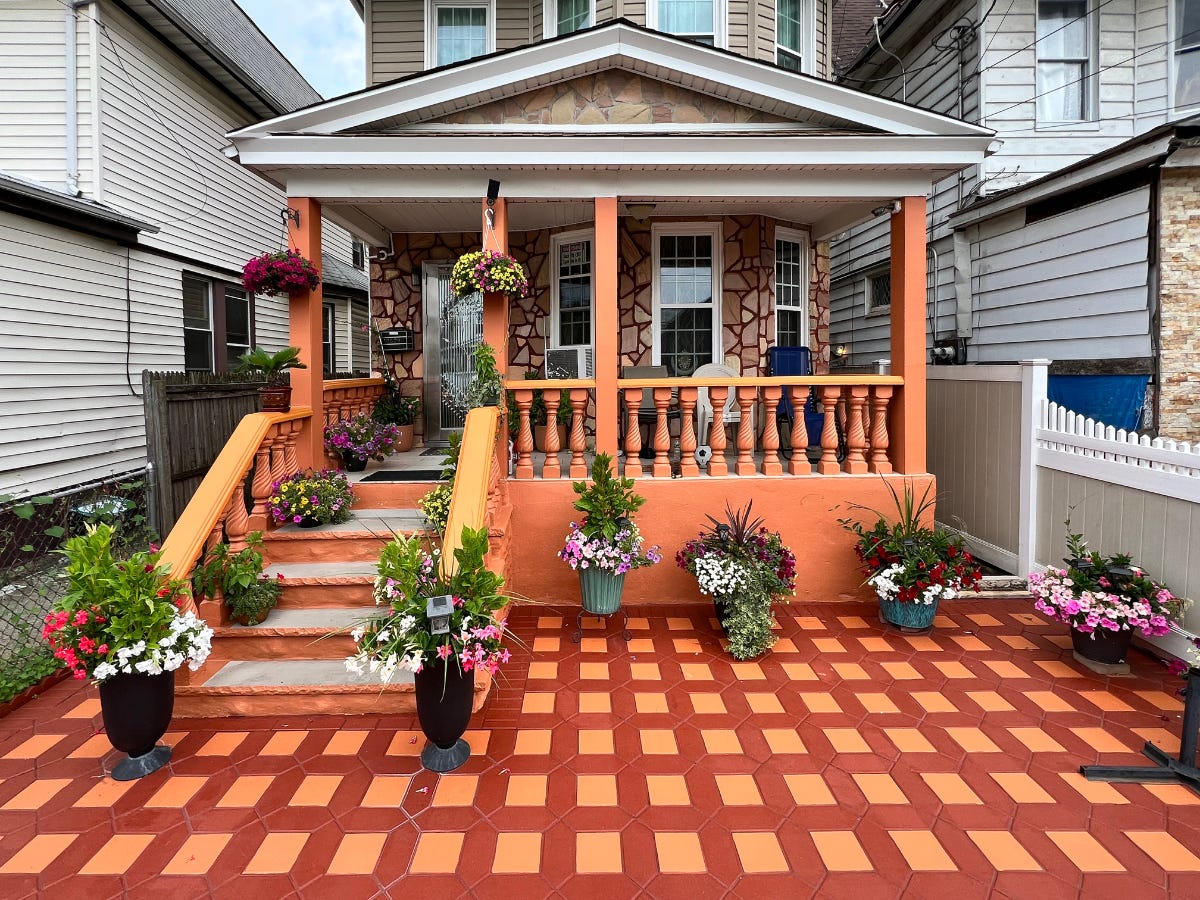
Like All the Queens Houses, All the Queens Gardens highlights one garden per page, with some exceptional examples garnering two pages or even also a two-page spread. The gardens are given descriptive and often humorous titles and brief descriptions that highlight the plantings and/or formal attributes of the gardens, while also situating many examples within the borough’s wider context. While the first book opted for a geographical organization, the new book has typological chapters, ranging from “Formal Gardens” and “Fountains” to “Astroturf” and “All God’s Creatures,” the last going far beyond the ubiquitous lions that guard many houses in my and other Queens neighborhoods. I concur with Columbia University professor Lynnette Widder’s introductory essay, in which she finds Herrin-Ferri’s latest “at the intersection between an architectural study and an anthropological inventory.” Along those lines, the Houses book, in its consistently overcast photography, echoes Bernd and Hilla Becher’s documentation of industrial buildings last century, but as the photos shown here indicate, there are occasional blues skies to be found poking through the clouds in Gardens. One more notable difference between the two books is found in the almost squarish format for the new book, which makes sense given the horizontal orientation of many of Herrin-Ferri’s photos.
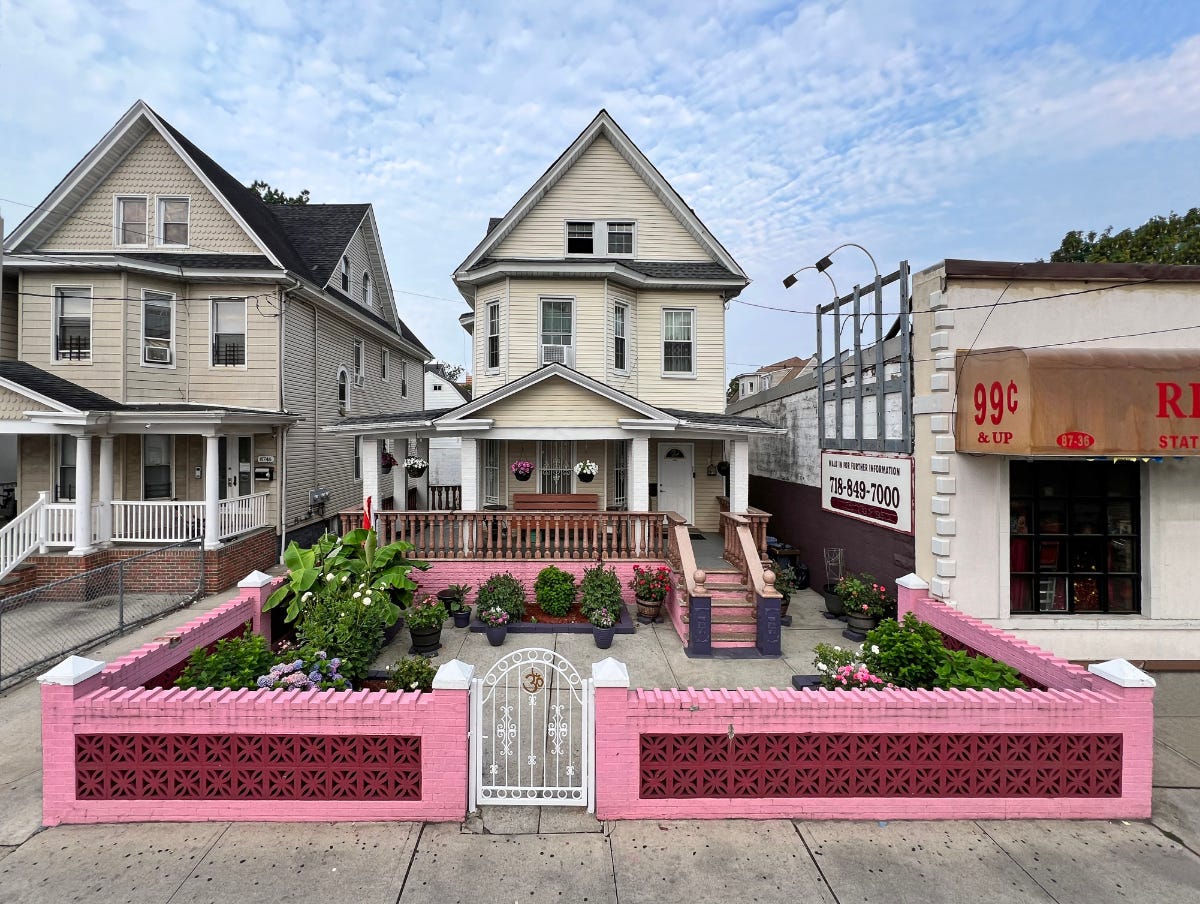
The primary shared characteristic and draw for readers is Herrin-Ferri’s focus on everyday architecture and landscapes—there is little to no capital-A architecture or capital-LA landscape architecture to be found in the pages of his two books. Sure, some of the formal gardens in the first chapter may have been created with the input of landscape designers, and maybe some of the gardens in the book front the homes of professional gardeners, but the “Astroturf” chapter is a not-so-subtle hint that these gardens prize utility, ease of maintenance, and frivolity over beauty and other formal concerns. Nevertheless, once the reader sets aside any preconceived notions over what a residential garden should look like and be planted with, the cleverness of the DIY creations comes to the fore.
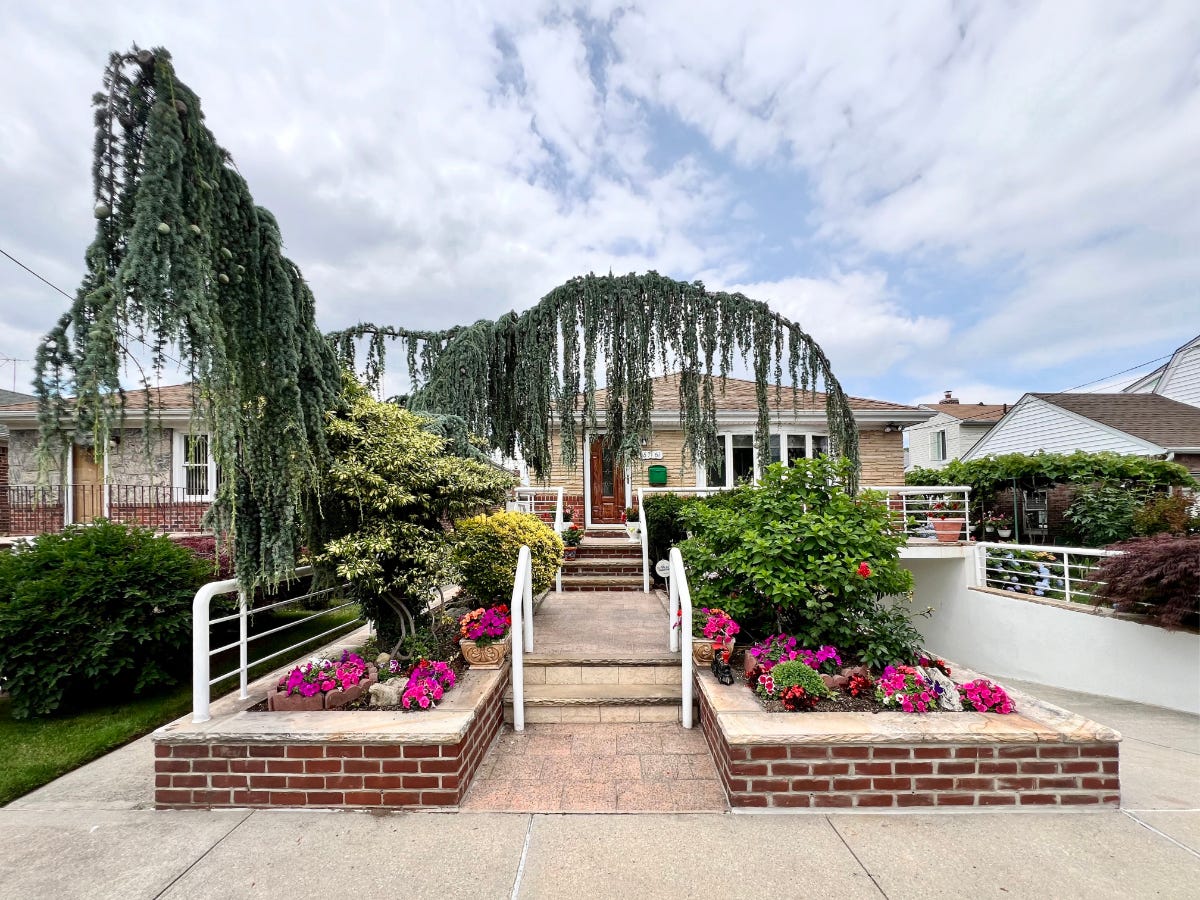
The photographs shown here give a taste of what’s inside the book, but you’ll have to use your imagination to picture a few of the highlights that stood out to me. There’s the “Blue Plastic Wonderland” in Maspeth—found, like the cover photo, in the “Chinese Vegetable Gardens” chapter—where 55-gallon rain border a trellis of zucchini spanning across an alley. The “Fountains” chapter features “Salvatore’s Sea Shell Extravaganza,” which is just as its title says; Salvatore has been working on his monumental work of folk art since 2000, and in one photo we see him doing such (he is the only human I spied in the book). Finally, in the last chapter, “All God’s Creatures,” two gardens in Sunnyside and Auburndale feature “Shady Apes,” one tucked beneath a Japanese maple and one up in a tree, staring at passersby. All this goes to say that there are lots more treasures than trash in the pages of All the Queens Gardens.
Books Released This Week
(In the United States; a partial, curated list)
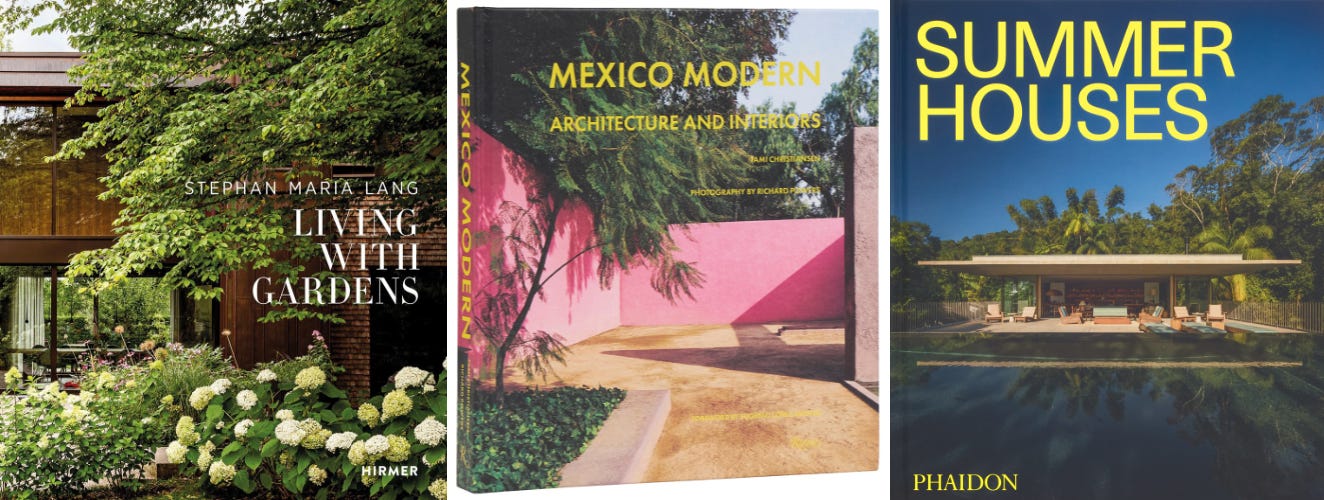
Stephan Maria Lang: Living with Gardens, edited by Björn Vedder (Buy from Hirmer Publishers / from Amazon / from Bookshop) — “A match made in heaven: Stephan Maria Lang’s top-class architecture in the midst of blooming gardens.”
Mexico Modern: Architecture and Interiors, by Tami Christiansen (Buy from Rizzoli / from Amazon / from Bookshop) — “A captivating exploration of Mexican architecture, from iconic homes by legendary masters to new groundbreaking work shaping the future of design.”
Summer Houses (Buy from Phaidon / from Amazon / from Bookshop) — “Explore fifty extraordinary architect-designed homes that capture the spirit of summer.”

The Architecture of Will Bruder, by Will Bruder, et. al. (Buy from ORO Editions / from Amazon / from Bookshop) — “In celebration of his 50+ years in practice, architect Will Bruder is pleased to share this selection of his most-exemplary projects, presented through hundreds of gorgeous photographs, drawings, and original sketches.”
The Iconic Nordic House: Modern Masterworks Since 1900, by Dominic Bradbury, photography by Richard Powers (Buy from Thames & Hudson / from Amazon / from Bookshop) — “This lavishly illustrated book explores the great exemplars of Nordic residential architecture from the past 120 years, featuring groundbreaking modernist homes and contemporary dream residences.”
Toronto Edwardian: Frank Darling, Architect of Canada’s Imperial Age, by David E. Winterton (Buy from McGill-Queen’s University Press / from Amazon) — “Frank Darling gained prominence as the principal of Darling & Pearson Architects, designing a plethora of bank buildings in the early twentieth century. Toronto Edwardian positions Darling, whose work aligned with national ambitions and Britain’s global imperial project, as a leading figure of the era.”

Structure and Type, by wulf architekten (Buy from Birkhäuser / from Amazon) — “In their new book, wulf architekten present 17 buildings completed between 2014 and today. In a dialog with the renowned architecture critic Hubertus Adam, wulf architekten discuss questions that determine the current discourse on building culture.”
Behind Office Doors: Use and Users in the History of Office Buildings, edited by Jens van de Maele (Buy from Cornell University Press [US distributor for Leuven University Press] / from Amazon / from Bookshop) — “[This book] examines how office spaces were conceived by architects, designers and managers, and how they were inhabited, experienced and sometimes contested by workers.” (An open-access PDF is available.)
In Search of Spatial Scripts: Introspective Improvisations for Two Construction Sites: Parcel X Encampment (1994) and The Goodwin Memorial (2004), by Peter Waldman (Buy from ORO Editions / from Amazon / from Bookshop) — “This project [collection of collages [that] evolves into vellum scrims] traces two construction sites through the self-reflective eyes of generations of others.” (See also my 2019 review of Waldman’s Lessons from the Lawn: The Word Made Flesh: Dialogues Between Citizens and Strangers.)
Full disclosure: As an Amazon Associate, AbeBooks Affiliate, and Bookshop.org Affiliate, I earn commissions from qualifying purchases made via any relevant links above and below.
Book News
Over at World-Architects, in a piece I edited, Nishi Shah reviews The Global Turn: Six Journeys of Architecture and the City, 1945–1989 (nai010 Publishers) by Tom Avermaete and Michelangelo Sabatino.
The Endless Sphere of Time, edited by Kate Jordahl, is one of the winners of the 2025 North Street Book Prize, which awards self-published books. “This luxuriously bound book pairs Geir Jordahl’s circular black-and-white images of liminal spaces in nature and architecture with short works by Norwegian modernist poet Rolf Jacobsen.”
Over at Punch List, Christopher Hawthorne reviews Reineir de Graaf’s forthcoming Architecture Against Architecture: A Manifesto.
House & Garden lists “19 of our favourite books on country houses and country house design.”
Over at Common Edge, Mark Alan Hewitt reviews The Urban Design Legacy of Colin Rowe, the “massive tome” edited by Steven W. Hurtt and James T. Tice,
The Toronto Sun looks at Don Mikel’s Canadian Architectural Styles: A Field Guide (James Lorimer & Company), calling it “a panoramic survey of the buildings that have shaped communities across the country.”
Over at ArchitectureAU, Michael Linzey, former teacher of architectural design and theory at the University of Auckland, presents his new book, Speaking with Houses: A Cross-Cultural Critique of Heidegger’s Ontology (Routledge).
From the Archives
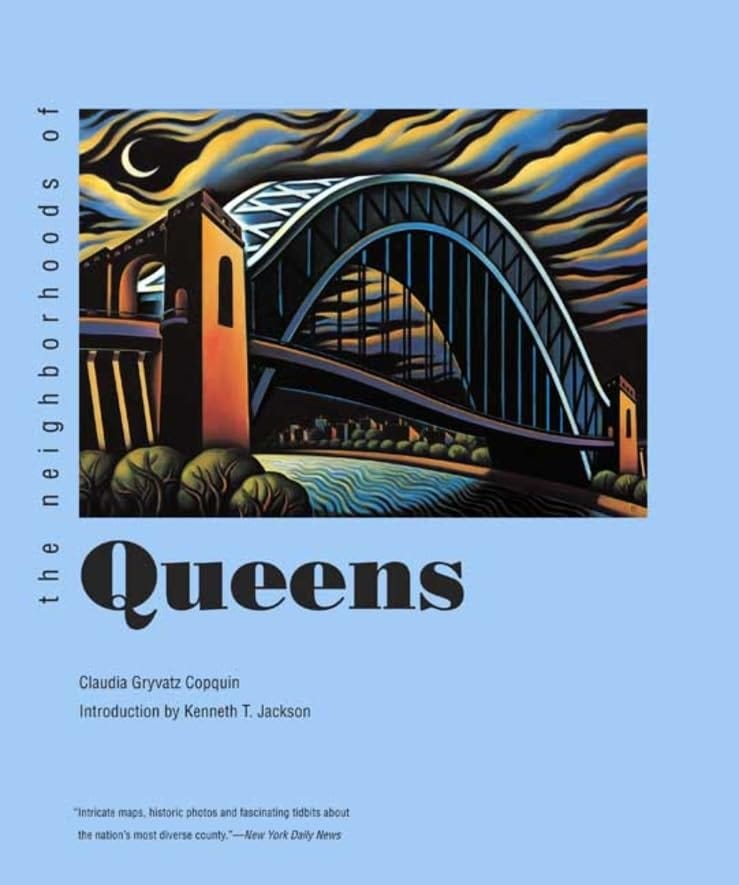
Back in 2009, when I was out of work as an architect but had yet to land the book deal that would pivot me toward writing full-time, I tried my hand at freelance writing, submitting a few book reviews to The Architect’s Newspaper. One such review looked at a couple New York City guidebooks, one of them The Neighborhoods of Queens, published by Yale University Press in 2007 (the other was the fourth edition of Guide to New York City Landmarks). The book was written by Claudia Gryvatz Copquin as the second installment in the Neighborhoods of New York City series edited by historian Kenneth T. Jackson. Unfortunately, the series did not continue beyond Brooklyn and Queens. Below is an excerpt from the unedited text I submitted to The Architect’s Newspaper for my review.
In the Citizens Committee for New York City’s annual quality of life survey, residents of Queens were found to be the most satisfied with their neighborhoods. The survey's low sampling (4,400 residents across the five boroughs) makes the results far from conclusive, but an emphasis on neighborhoods as the defining area for community belonging and social interaction is an important one that, while fairly obvious, merits mention and attention.
The Citizens Committee extends this focus on neighborhoods to its series of five planned books, edited by historian Kenneth T. Jackson, presenting every neighborhood in the city's boroughs. The second installment, following 1993's book on Brooklyn, is last year's The Neighborhoods of Queens by Long Island City resident Claudia Gryvatz Copquin. All 99 neighborhoods in the “most diverse county in the country” are profiled in maps, facts, photographs, and text, broken up by “photo spreads” that present places and spaces that span neighborhood boundaries.
Being an Astoria resident, I immediately scanned the section on the Queens neighborhood I know best. In seven pages, the text touches upon many of the area's well-known places and defining characteristics (Steinway's factory town, Kaufman Astoria Studios, the large Greek population) and extols the virtues of the place today. Given its length and breadth, it is an accurate yet incomplete portrait of the neighborhood and its residents, missing some notable buildings, spaces and historical events. It stands to reason that the same criticism applies to the other neighborhoods. Granted, the chapters do successfully convey what makes each neighborhood special, but the portraits are lacking, bogged down in an erratic mix of history and boosterism.
Thank you for subscribing to A Weekly Dose of Architecture Books. If you have any comments or questions, or if you have your own book that you want to see in this newsletter, please respond to this email, or comment below if you’re reading this online. All content is freely available, but paid subscriptions that enable this newsletter to continue are welcome — thank you!
— John Hill