
Next Installments
Architecture Books – Week 10/2026

This newsletter for the week of March 2 looks at two books being released this week, both of them continuations of ongoing series and both exhibiting correspondingly consistent book designs. First is Caruso St John Collected Works: Volume 3 2010–2020, published by MACK, and Typology: Tashkent, Genoa, Tbilisi, Casablanca. Review No. IV, published by Park Books. At bottom is an alternative take on series: a monograph/exhibition catalog with an entirely different design compared to its predecessors. In between are the usual headlines and new releases. Happy reading!
Books of the Week
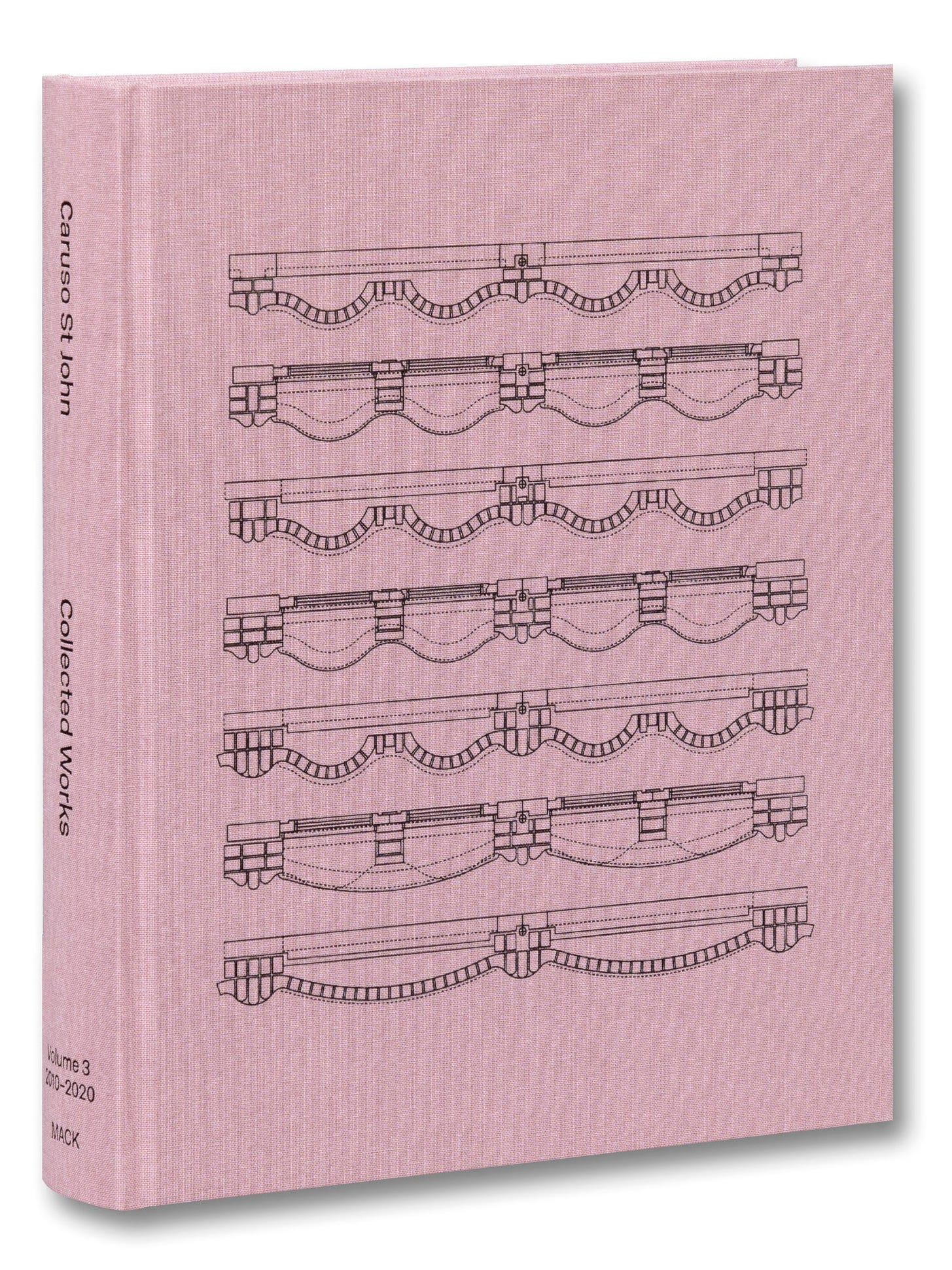
Caruso St John Collected Works: Volume 3 2010–2020, by Caruso St John (Buy from MACK / from Amazon)
Michael Mack, formerly of Steidl, founded MACK in London in 2010. After a dozen years of putting out books on art and photography, MACK branched out into architecture and began putting out a few titles per year, ranging from history/theory and sustainability to education and translations of important works. A staple of MACK’s architectural output since 2022 has been the collected works of Caruso St John, the London and Zurich firm founded by Adam Caruso and Peter St John in 1990. Caruso St John Collected Works: Volume 1 1990–2005 was released in 2022, when MACK began releasing architectural titles, with Collected Works: Volume 2 2000–2012 following in 2023.
The third volume, covering the years 2010 to 2020, is being released this week, though the architects admit in their brief introduction that the practice was so busy during that period (one indicator is how they opened the Zurich office in 2010) that the forthcoming Volume 4 will cover more projects from the same decade. Consistent among the volumes published to date is a presentation of Caruso St John projects alongside critical texts from journals and magazines—some directly related to their work, some inspiring to the duo—as well as a beautiful production that includes light-colored linen covers with printed drawings, and matte papers with an appropriately minimal page design for both projects and texts. Be forewarned that high production values equal high cover costs: $120 for each volume.
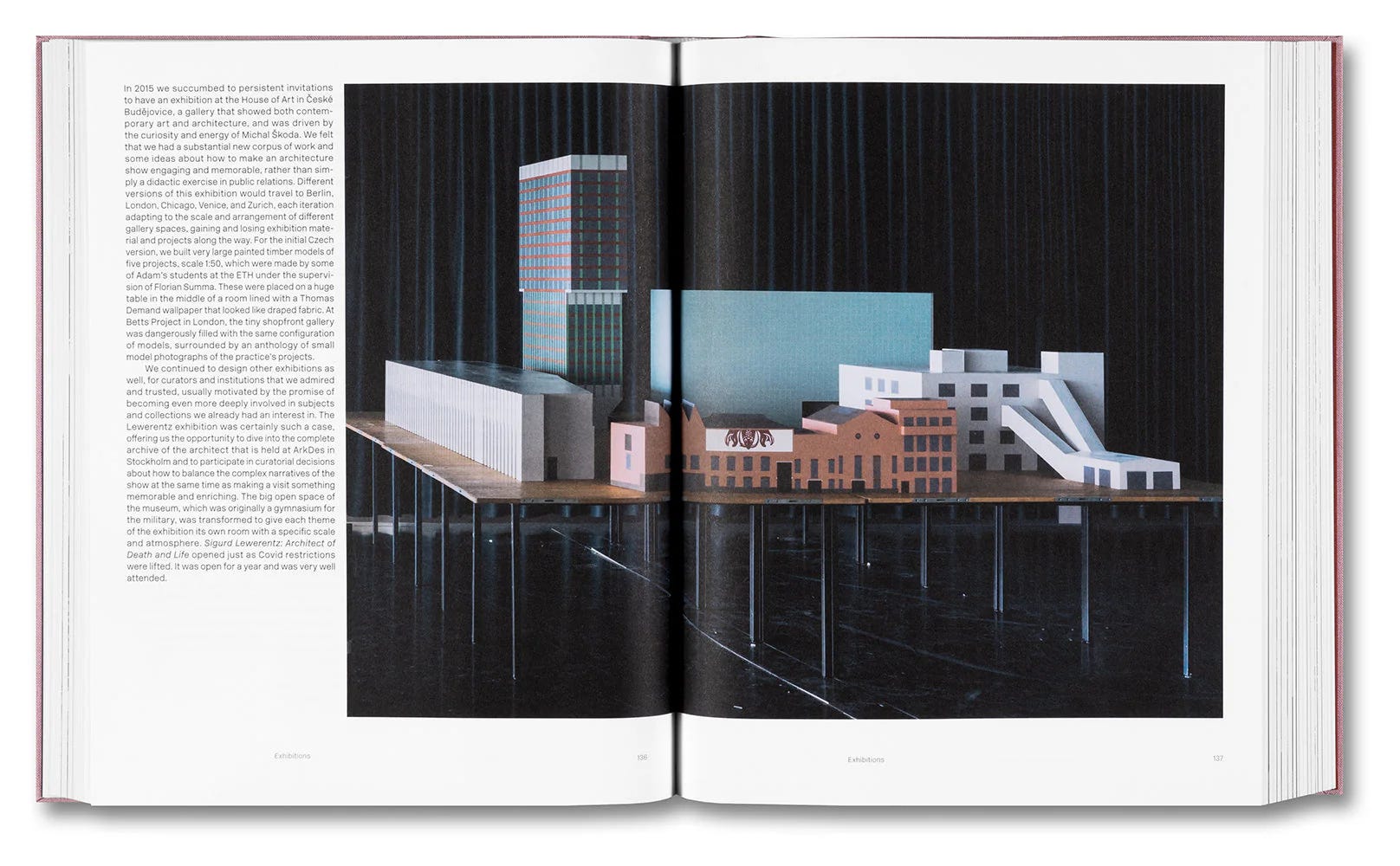
The collected works of the third volume are organized into five themes—The Urban Figure, Exhibitions, Colour, Residues of Memory, and Transformation—with the fourth volume promising to present five additional themes for projects over the same ten-year period. The book starts with a piece by Caruso, an interview he conducted with Louisiana Channel in 2017, whose title is very telling: “Novelty Is Nonsense.” One would be hard-pressed to see novelty driving the work of Caruso St John, especially given how their buildings go to great strides to relate to the urban contexts in which they reside.
A standout among the projects presented in “The Urban Figure” is the Bremer Landesbank Headquarters in Bremen (one of many projects in the book found in Germany), which combines historic stone facades with expressive brick facades made up of 64 different types of molded bricks. Befitting the way their monographs rely on external texts in lieu of project descriptions and the like, information on the bank headquarters is gleaned from a 2018 interview reprinted after the project. As such, the projects themselves rely greatly on the presentation of photographs and drawings, the latter ranging from floor plans and sections to details, such as the plan details of the bank’s undulating brick walls that are printed on the book’s soft pink cover.
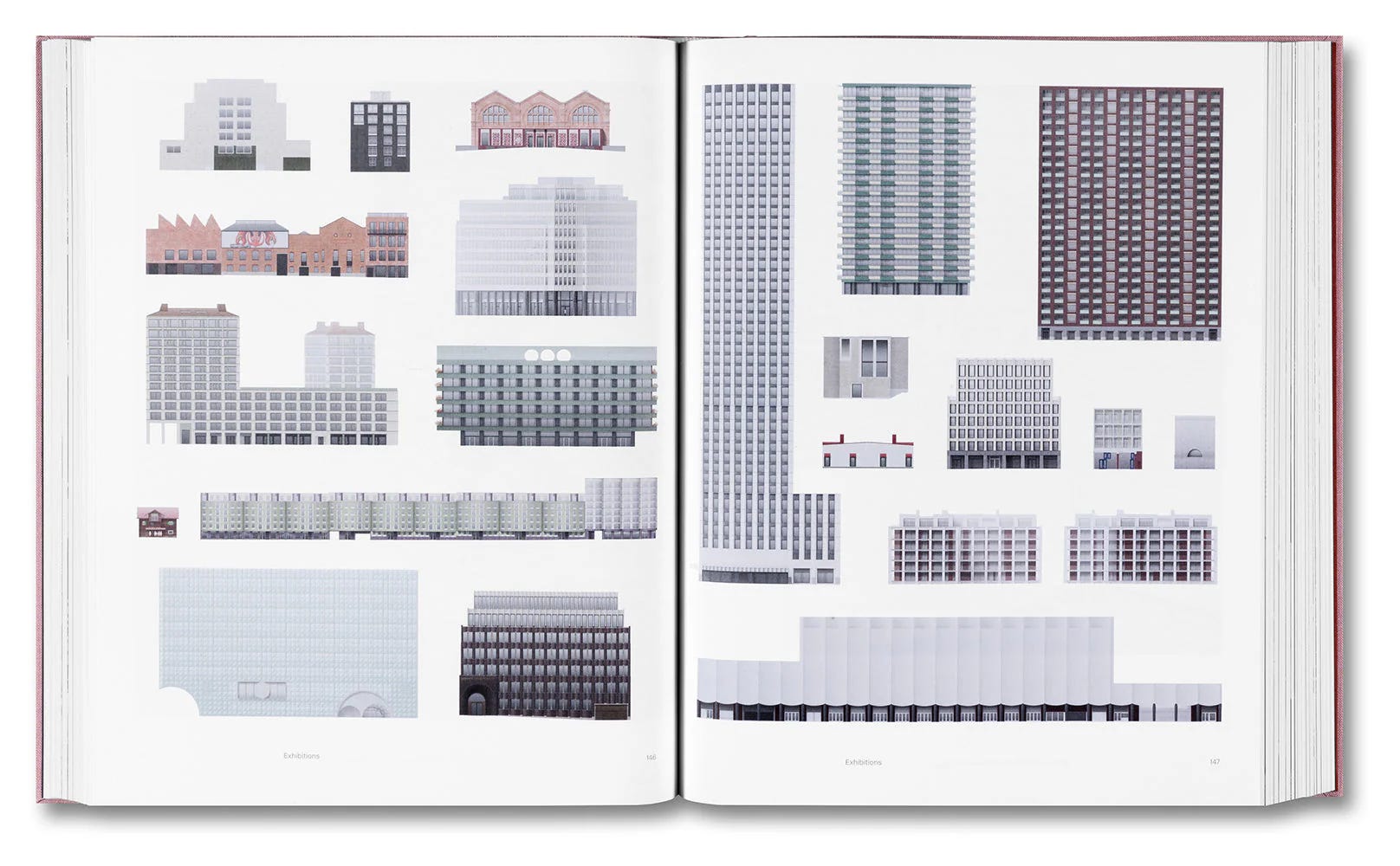
Also standing out among Caruso St John Collected Works: Volume 3 2010–2020 are the “Exhibition” and “Colour” sections in their entireties. The former consists of both exhibitions of their own work as well as designs they carried out for art and architecture exhibitions. Working with their students at ETH Zurich, the architects created and assembled models and drawings of their own buildings for exhibitions that have traveled from the Czech Republic to London, Chicago, Berlin, Venice, and back to Zurich (spreads above). A standout among the exhibitions they designed is Sigurd Lewerentz: Architecture of Life and Death (ArkDes, 2021–2022), particularly in the way each gallery was saturated in color.
The Lewerentz exhibition suitably transitions into the themed “Colour” section. Although not the longest section in the book, the very fact of its being signals how Caruso and St John, unlike a number of other architects of their same generation, are not afraid of color. Their careful, intellectual approach to using color is evident in a spread that consists solely of photos of the architects’ Post It-noted copy of Sanzo Wada’s A Dictionary of Color Combinations. Of course, color is not limited to this chapter; it permeates the book, sometimes boldly but often subtly, like the covers of the architects’ ongoing series of collected works.
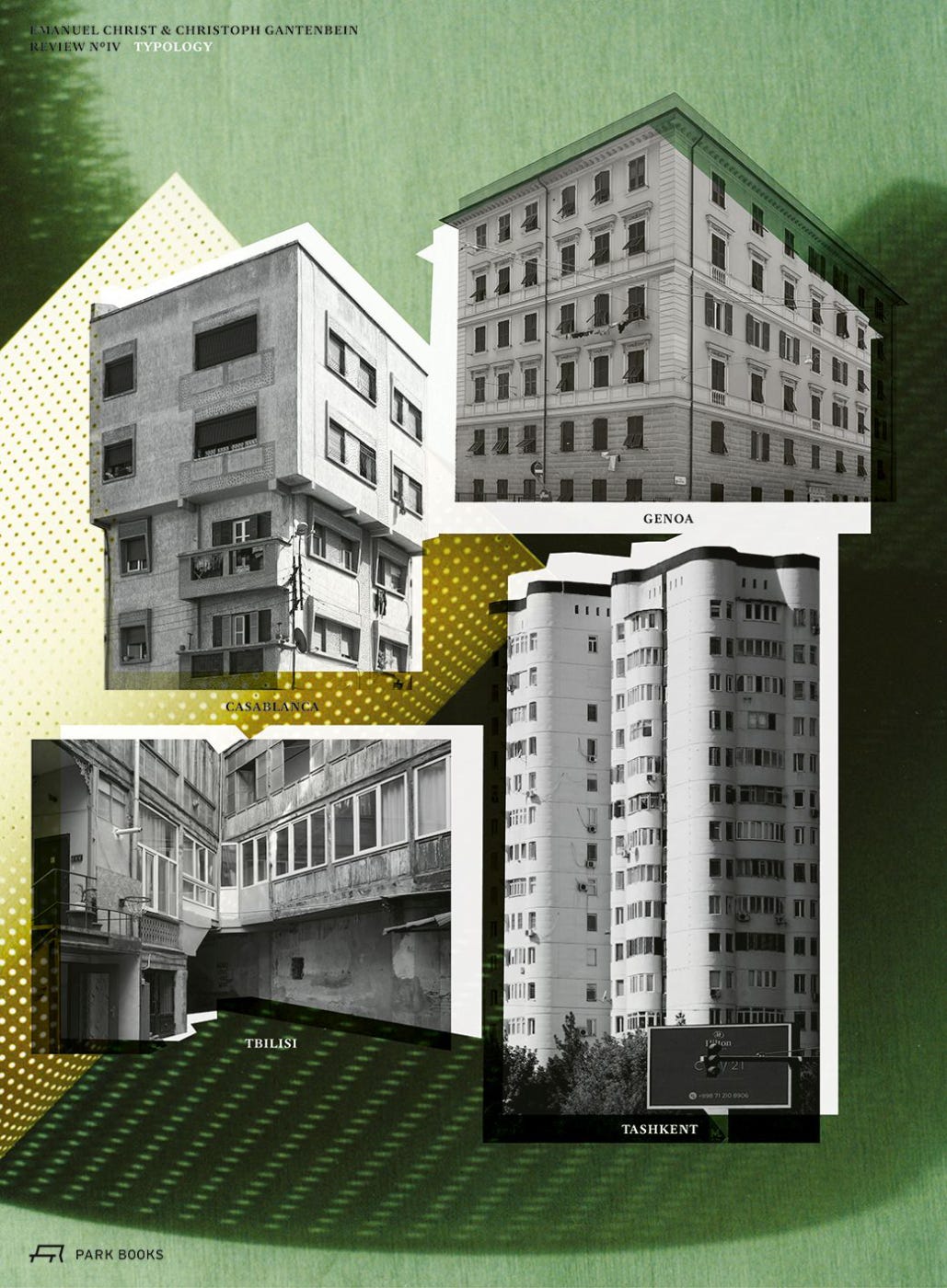
Typology: Tashkent, Genoa, Tbilisi, Casablanca. Review No. IV, edited by Emanuel Christ, Christoph Gantenbein, et. al. (Buy from University of Chicago Press [US distributor for Park Books] / from Amazon / from Bookshop)
With the publication of Typology: Tashkent, Genoa, Tbilisi, Casablanca this week, Park Books has now published three books in the “Typology” series that collects architectural analyses carried out by Basel architects Emanuel Christ and Christoph Gantenbein with their research team at ETH Zurich. Before it, Typology: Hong Kong, Rome, New York, Buenos Aires was published in 2012 and Typology 2: Delhi, Paris, São Paulo, Athens was published in 2015. Okay, but why is the new book subtitled “Review No. IV”? Turns out Christ & Gantenbein first published, with gta Verlag, Hong Kong Typology: An architectural research on Hong Kong building types, in 2010, coinciding with the exhibition Hong Kong in Zurich: A Typological Transfer at the Istituto Svizzero in Venice.
The first review book, now out of print and very hard to find, is fairly small (14.8 x 21cm / 5-3/4 x 6-1/4”), with one typological building per spread (as can be seen on the architects’ website). The books put out by Park Books, on the other hand, are large—basically atlas-sized, with three or four buildings presented on each spread in the first half and large full-bleed photographs filling the second half. This format, visible in the below spreads, is consistent across the three Typology books, from Review No. II to Review No. III and Review No. IV. In their size and methodical documentation of buildings in different cities, the books remind me of the great Floor Plan Atlas: Housing edited by Friederike Schneider.
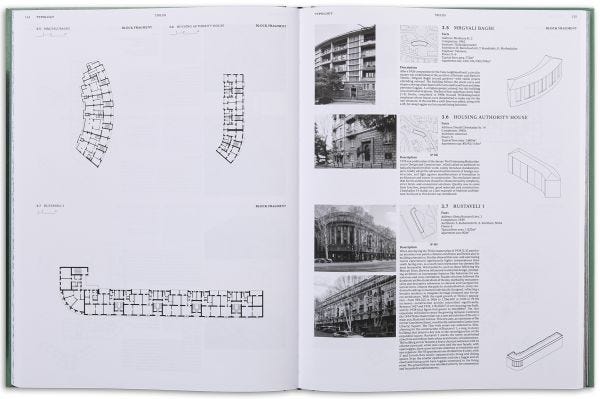
As the title of the series indicates, Christ and Gantenbein are not interested in outstanding singular buildings found in the various cities they visit with their students; they want to examine the building types that are generated by the different political, economic, and social contexts of each place. To them, cities today “are the result of real-estate operations, always with the aim of maximizing profit” and leading to “optimized buildings, in investor-friendly dimensions, with efficient layouts.” Similarly, spaces in office buildings “conform to generic standards … contrived designs that use clichéd codes to fulfill the demands of prestigious corporate imaging.” Instead of looking to historic examples out of touch with today’s way of life as antidotes to the above, the duo focuses on modern 20th-century buildings “that continue to function in vital ways.”
So in Tashkent (a city that has been receiving a lot of attention of late) we find reinterpretations of mahalla, or traditional neighborhood structures, as well as terraced houses, block fragments, gallery buildings, and so forth. Befitting Genoa’s coastal context, standout typologies there include the topoographic slab, in which long buildings undulate according to natural contours, and the stepped buildings that cascade down hillsides. The towers of Tbilis exhibit some Soviet-experimentation, while I found Casablanca’s patio carpet (a great phrase) and courtyard typologies very appealing.
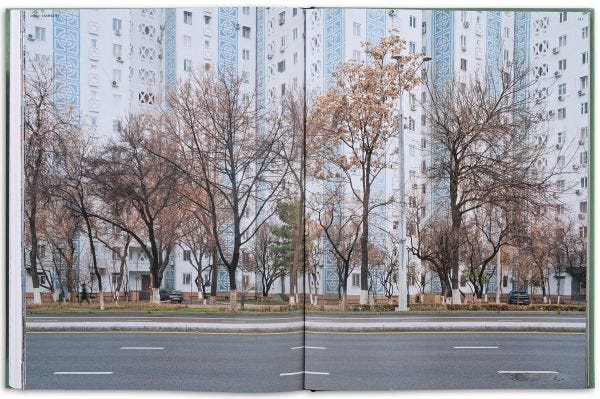
Comparing the latest Typology book published by Park to its two predecessors, the only noticeable change is the addition of maps that locate and key some of the projects in the book; the maps come after four essays (one per city) that give historical context to the typological analyses, with references in the texts clearly keyed to the projects. In these details, Christ, Gantenbein, and their fellow editors were cognizant of the encyclopedic nature of the book, and as such they provided numerous references and therefore numerous ways to navigate the book. This is helpful, but so is having all three books, given the global reach of the series and the way the architects and their students have analyzed cities that range from the obvious (Hong Kong and New York) to the obscure (Genoa, Tbilisi) and many shades in between.
Books Released This Week
(In the United States; a partial, curated list)
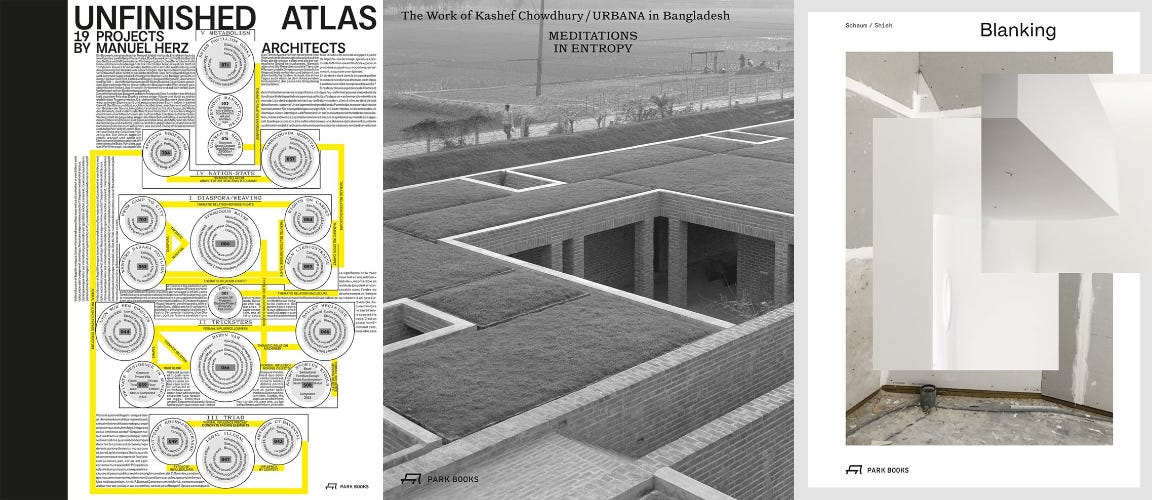
Unfinished Atlas: 19 Projects by Manuel Herz Architects, edited by Ludovic Balland and Francesca Mautone (Buy from University of Chicago Press [US distributor for Park Books] / from Amazon / from Bookshop) — “The first book on Basel-based firm Manuel Herz Architects features nineteen projects from their portfolio since 2004.”
Meditations in Entropy: The Work of Kashef Chowdhury / URBANA, by X (Buy from University of Chicago Press [US distributor for Park Books] / from Amazon / from Bookshop) — “This book documents the innovative work of the Dhaka-based practice Kashef Chowdhury/URBANA as it adapts to the reality of climate change.”
Blanking: An Annotated Archive of Projects and Thoughts on Architecture, by Troy Schaum and Rosalyne Shieh (Buy from University of Chicago Press [US distributor for Park Books] / from Amazon / from Bookshop) — “The first book on the work and vision of architecture firm Schaum/Shieh.”
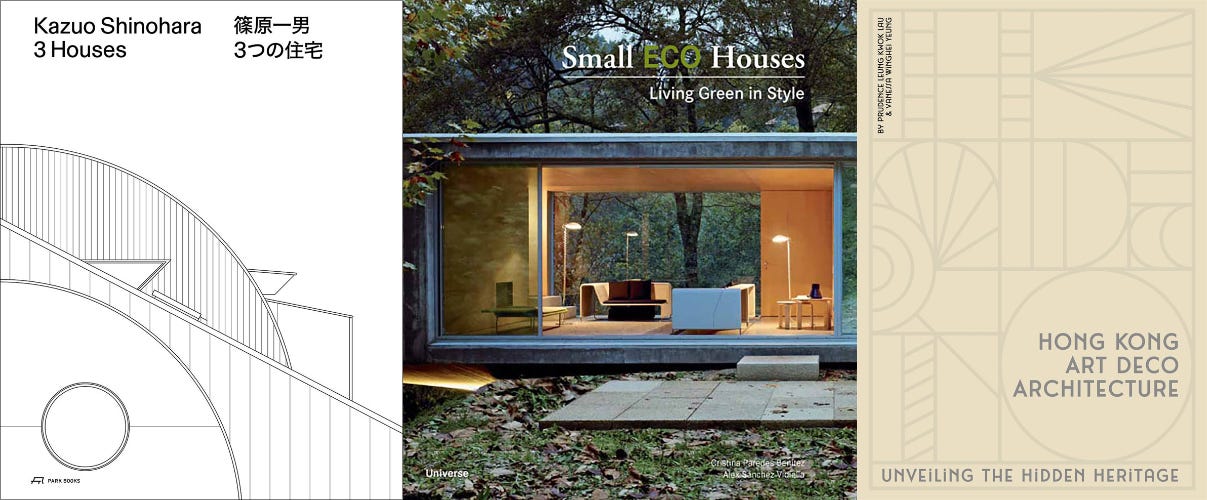
Kazuo Shinohara – 3 Houses: House in White, House in Uehara, House in Yokohama, edited by Christian Dehli and Andrea Grolimund (Buy from University of Chicago Press [US distributor for Park Books] / from Amazon / from Bookshop) — “A new edition of an award-winning book on three of Kazuo Shinohara’s designs.”
Small Eco Houses: Living Green in Style, by Cristina Paredes Benitez and Alex Sanchez Vidiella (Buy from Rizzoli / from Amazon / from Bookshop) — “A fresh look at small homes that combine practicality, high design, and stylish living spaces with ecologically sensitivity - living small is living ‘green.’”
Hong Kong Art Deco Architecture: Unveiling the Hidden Heritage, by Prudence Leung Kwok Lau and Vanessa Winghei Yeung (Buy from Columbia University Press [US distributor for The Chinese University of Hong Kong Press] / from Amazon / from Bookshop) — “As surviving Art Deco buildings are hidden treasures and portals to forgotten marvels and little-known history of interwar Hong Kong, Lau and Yeung show us how Art Deco heritage bears witness to the city’s societal progress in various aspects, early efforts at modernization before the postwar era, and its aesthetic connections with the international stage.”
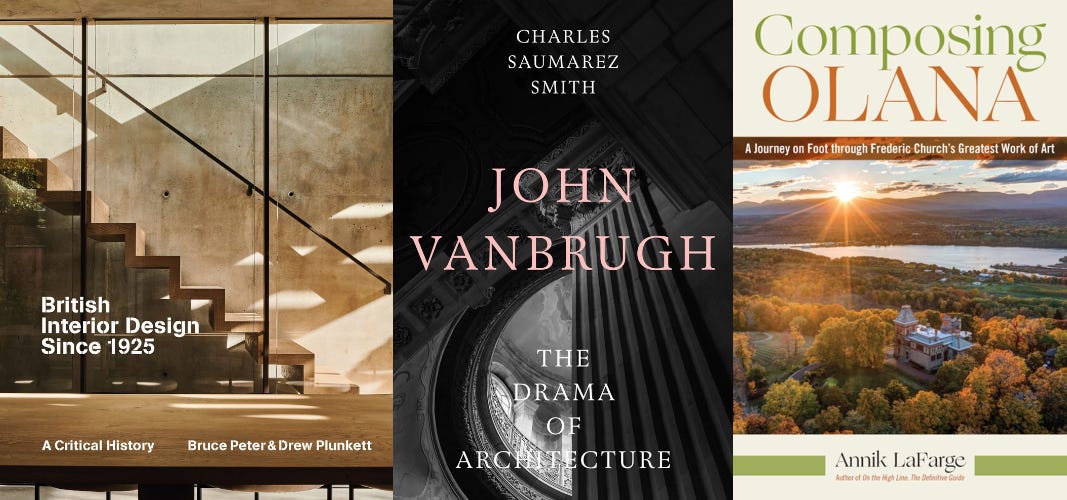
British Interior Design since 1925: A Critical History, by Bruce Peter and Drew Plunkett Buy from Lund Humphries / from Amazon / from Bookshop) — “This is the first critical account of the history of Interior Design in Britain, one that is distinct from that of Architecture, and which gives the profession a sense of its own identity.”
John Vanbrugh: The Drama of Architecture, by Charles Saumarez Smith (Buy from Lund Humphries / from Amazon / from Bookshop) — “Charles Saumarez Smith paints a fascinating portrait of a man whose architecture was shaped by his personality. The book also explores Vanbrugh’s activities as a playwright and theatre manager, his circle of friends, his place in 18th-century society, and, in a final section, his influence on later architects from Robert Adam to Robert Venturi and Denise Scott Brown.”
Composing Olana: A Journey on Foot Through Frederic Church’s Greatest Work of Art, by Annik LaFarge (Buy from Fordham University Press / from Amazon / from Bookshop) — “The first and only book devoted to the landscape Frederic Church designed at Olana—what he considered his greatest work of art—timed to coincide with the bicentennial of his birth.”
Full disclosure: As an Amazon Associate, AbeBooks Affiliate, and Bookshop.org Affiliate, I earn commissions from qualifying purchases made via any relevant links above and below.
Book News
Congratulations to Brooklyn bookstore Head Hi on receiving one of the AIA New York chapter’s 2026 awards: the Architecture in Media Award.
Last week I included a headline related to a new Kengo Kuma book, and here is a headline on yet another book on the prolific Japanese architect: an excerpt from KKAA: Kengo Kuma and Associates: The Details of Designing Soft and Small (Schiffer Publishing) at Common Edge.
Whenever I come across an architecture-related post from Robert Bolick’s Books on Books collection, I share it here. One that I missed in January is Tony Broad’s Parallel Orders of Architecture, three differently structured volumes enclosed in a handmade illustrated box.
Archisearch looks at MVRDV henchman Winy Maas’s The Why Factory (T?F) at TU Delft, “where books, speculative scenarios, and data-driven studies function as design tools.”
The MIT Press Reader previews Silent Monoliths: The Coaling Tower Project, the recently published book of photographs by Jeff Brouws.
Read Jarret Fuller’s interview with Charles Saumarez Smith about his newly published book John Vanbrugh: The Drama of Architecture.
From the Archives
When putting together this week’s newsletter and trying to think of another book that was a third installment in a series, a monograph by BIG – Bjarke Ingels Group came to mind. Yet, unlike the consistent formatting of the Caruso St John and Christ & Gantenbein titles above, Formgiving: An Architectural Future History (2020) looks completely different than its two predecessors: Yes Is More (2009) and HOT TO COLD (2015). What makes them a series, beyond them being BIG monographs, is the fact they accompanied major exhibitions on the Danish firm and were all published by Taschen in matching paper sizes. I reviewed Formgiving in January 2021 and copy-pasted a portion of it below.
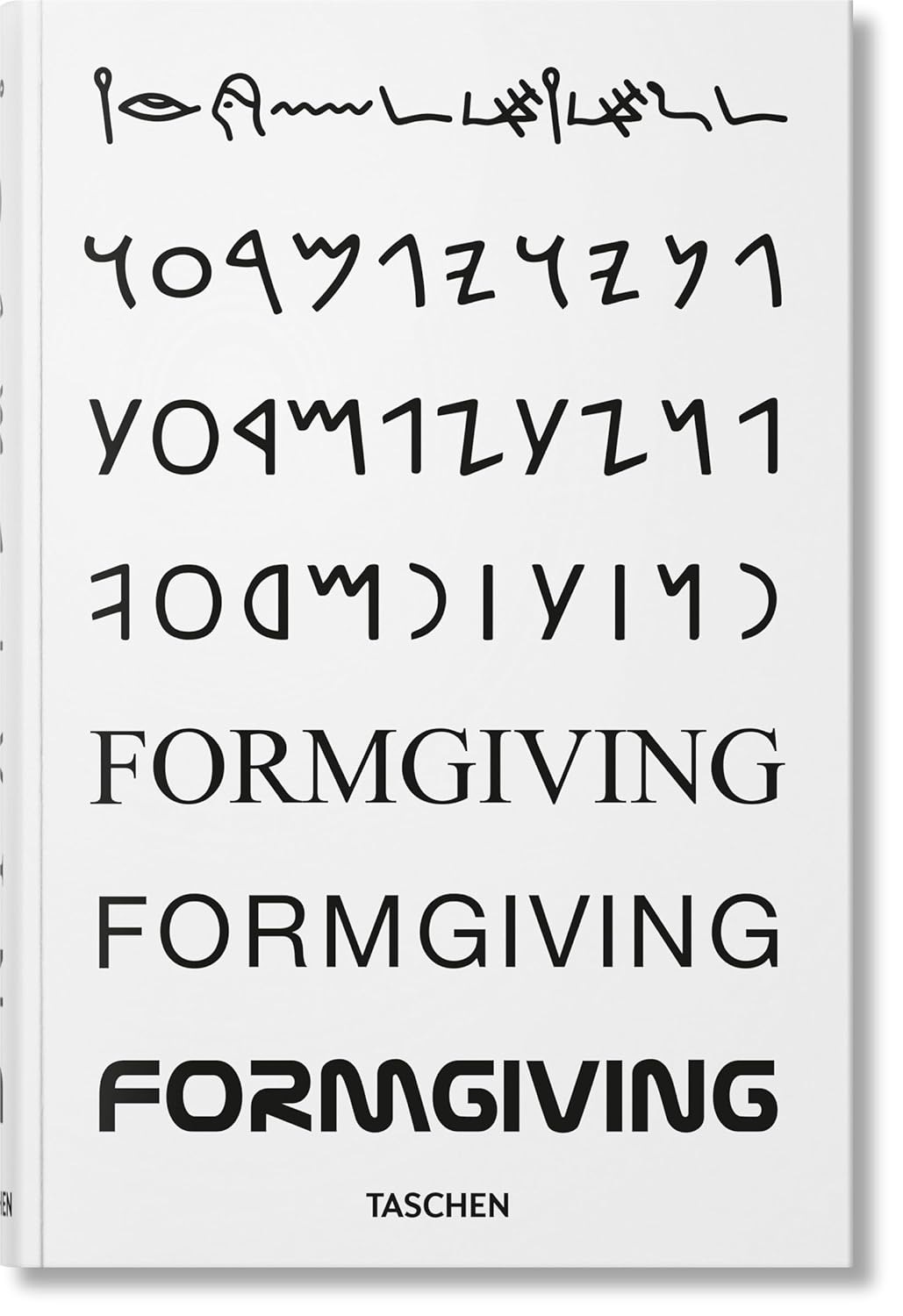
A trilogy should end, ideally, with something that unites or summarizes what came before. Krzysztof Kieślowski’s Three Colours trilogy brings the disparate stories of Blue, White, and Red together through a dramatic incident where all of the theretofore unrelated main characters are present. The title of Life, the Universe and Everything, the third book in Douglas Adams’ five-part Hitchhiker’s Guide to the Galaxy “trilogy” refers to “the Answer to Life, the Universe, and Everything”; although what should have been grand turns out to be absurd. Formgiving, the third book in BIG – Bjarke Ingels Group’s Taschen trilogy—following Yes Is More (2009) and HOT TO COLD (2015)—is different, delivering a twist at the end, albeit one that is strongly aligned with a sci-fi story that involves life beyond planet earth.
There, in the last pages of BIG’s new monograph … are City of New Hope, “a vision for a long-term human outpost on the Moon”; Mars Science City, “a prototypical test for a sustained city on Mars”; and Masterplanet, “a project that aims to establish a master plan for achieving a carbon-neutral planet Earth.” These global and extraterrestrial projects are far removed from the Danish Pavilion at Shanghai Expo 2010, the first built work in Yes Is More, as well as the Danish Maritime Museum and Superkilen, two projects in HOT TO COLD that are notable as being finalists for EU Mies Prizes. Buildings take up the most pages in Formgiving, to be sure, but they give way at the end to circumstances far removed from the lives shaped by BIG’s buildings.
[…]
Although I mentioned that this third book in BIG’s Taschen trilogy ends with the triumvirate of planetary projects, that’s literally not true. Following Masterplanet’s 40 pages (it’s given more space than any project in the book), are “Annexes”: numerous photos of their projects built with LEGOs, some musings on film and architecture, and photographs of Formgiving on display at the Danish Architecture Center (each book, it should be noted, accompanied a major retrospective exhibition). And then, following the requisite project credits, comes an epilogue Ingels wrote in the midst of the coronavirus pandemic and yet another project: “Back to the Future,” BIG’s entry in the Reimagining Brooklyn Bridge competition (like the EU Mies Prizes, they were a finalist but not a winner).
With these Annexes, it seems that BIG doesn’t want the trilogy to end, or doesn’t know to wrap it up. Clearly they don’t want this book to end with Masterplanet, which generated a bit of criticism last year [in 2020]—criticism Ingels anticipated when he spoke with Time magazine about the ongoing project. Will BIG’s future be defined by space colonies and Hyperloops? (Oddly, BIG’s Hyperloop projects are missing from the book.) Or will it be more closely aligned with Noma 2.0, another standout project in Formgiving? (It stands out for being un-BIG-like, not using BIG’s familiar icons, and for being a truly inviting setting.) I’m guessing BIG wants both. They want it all. An architect doesn’t coin the phrase “hedonistic sustainability” without wanting the best of both worlds—on all worlds, apparently.
Thank you for subscribing to A Weekly Dose of Architecture Books. If you have any comments or questions, or if you have your own book that you want to see in this newsletter, please respond to this email, or comment below if you’re reading this online. All content is freely available, but paid subscriptions that enable this newsletter to continue are welcome — thank you!
— John Hill