
Two Volumes, One Architect
Architecture Books – Week 20/2026

May is Monograph Month in these parts, so this newsletter for the week of May 11 looks at a new monograph on Ralph Johnson, design director at Perkins&Will, that is being released this week. It is a two-volume monograph, with one devoted to his creative journey and the second presenting some recent work. The book from the archive is another monograph on Ralph Johnson, while the usual headlines and new releases are in between. Happy reading!
Book of the Week
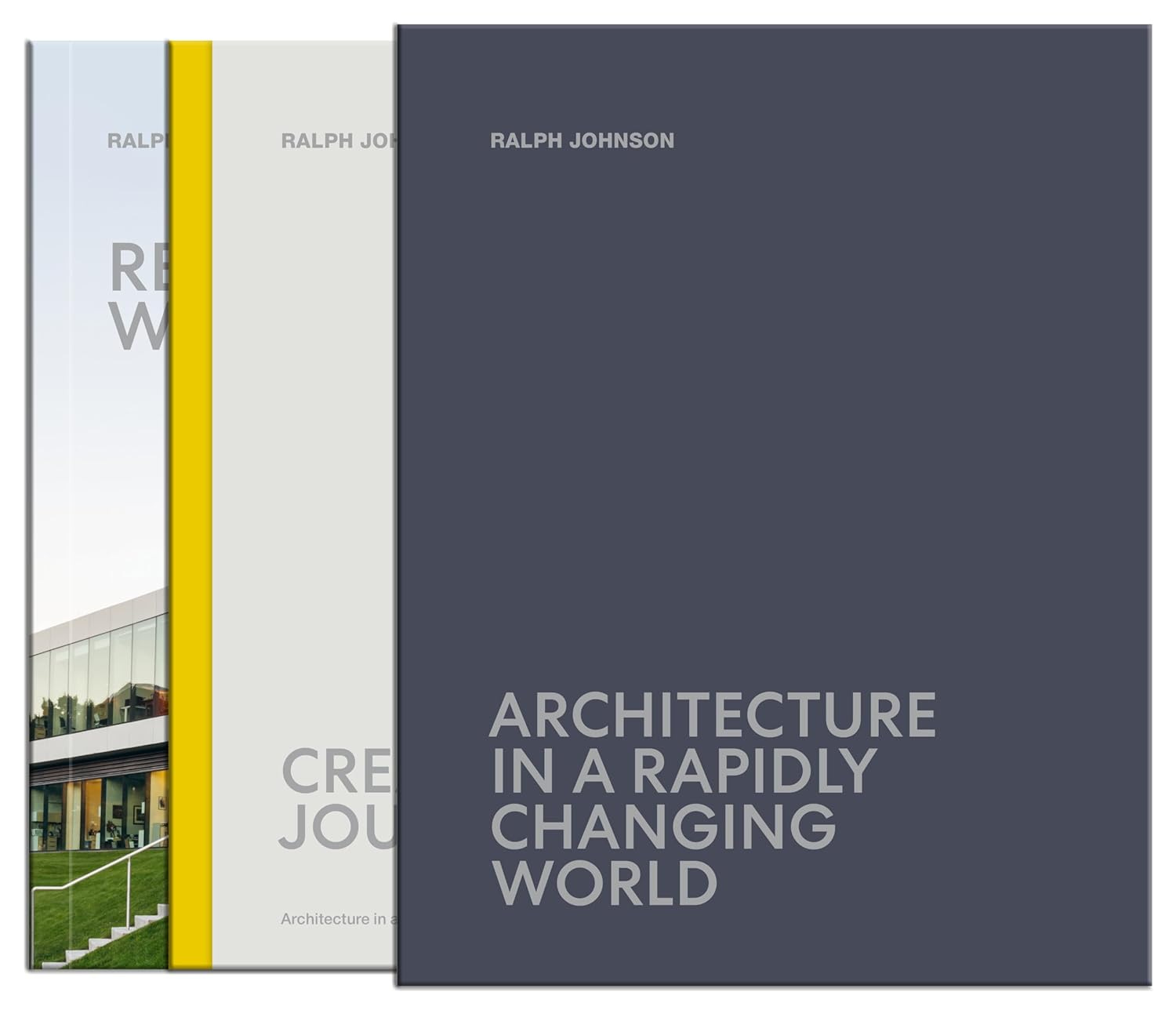
Architecture in a Rapidly Changing World, by Ralph Johnson, published by Images Publishing (Buy from Amazon / from Bookshop)
Released this week, this two-volume slipcased monograph on one architect in a massive architecture firm coincides with the 50th anniversary of Ralph Johnson working at Perkins&Will. The Chicago-based architecture firm was 41 years old when Johnson started there in 1976, having been founded by Lawrence B. Perkins and Philip Will, Jr. in 1935. Upon Johnson’s arrival, Perkins&Will had grown to encompass branch offices in New York, Washington, DC, Florida, and Tehran, but ten years later its purchase by Dubai-based Dar Al-Handasah (now Sidara) prompted a huge period of growth that saw the firm acquiring other firms and eventually growing tenfold, to its current size of 2,700 employees in 33 offices worldwide. Directing the whole firm’s design efforts is the nearly 80-year-old Johnson, an architect who is often seen as synonymous with the firm of which he is—numerically, at least—a small part of. As such, this book effectively doubles as a Perkins&Will monograph.
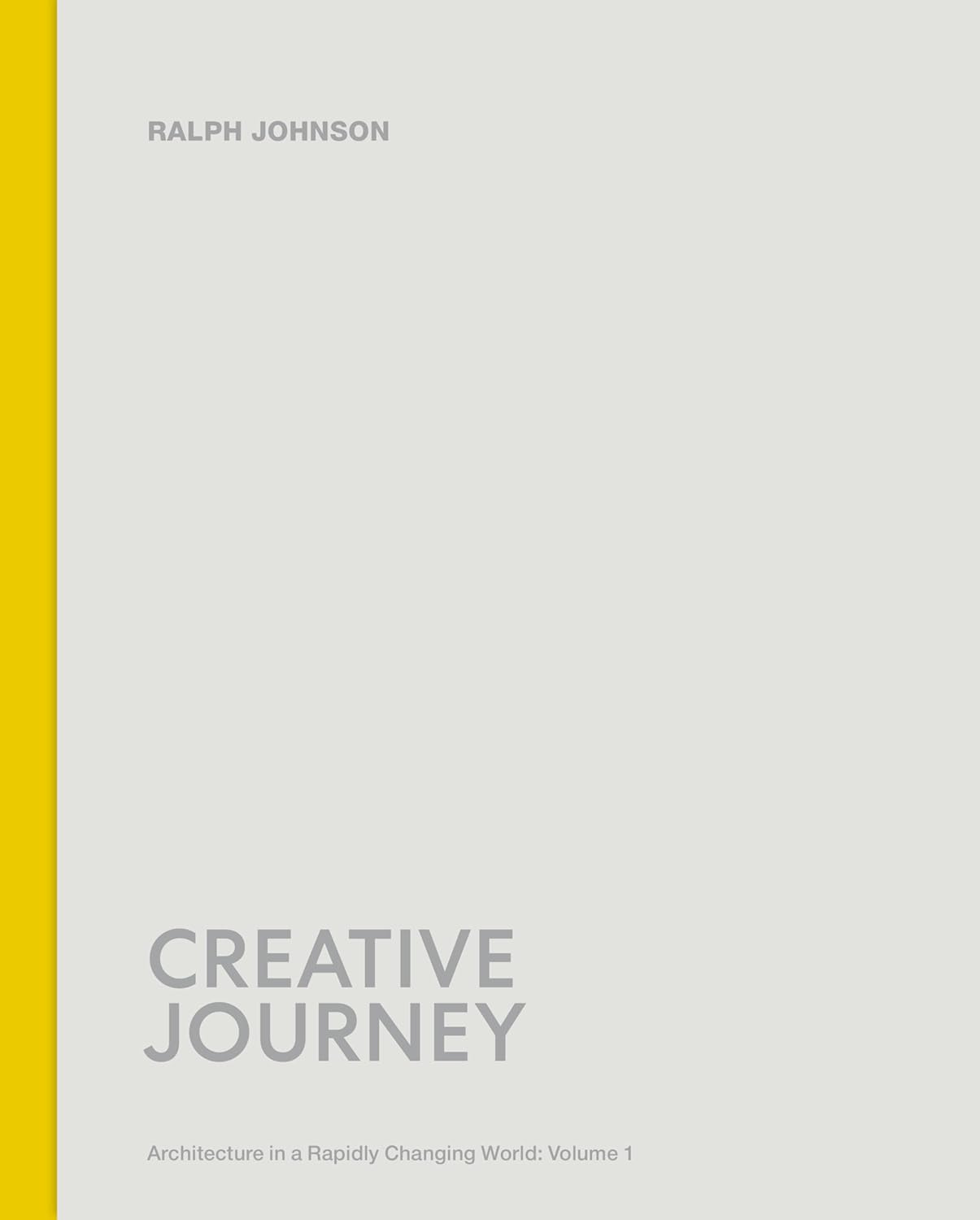
Perkins&Will made a name for itself with Crow Island School, a low-rise elementary school that opened in the Chicago suburb of Winnetka in 1940. Now a US National Historic Landmark, the school designed in collaboration with Eliel and Eero Saarinen was celebrated for its modern, human-centered design that gave each classroom its own small outdoor space. Its symbol was a simple brick clock tower—a feature that would become a staple of similar looking grade schools in the area in the years that followed (including my own). Although Perkins&Will’s portfolio subsequently branched out into other typologies outside of education, most prominently health care and offices, it was also schools in which Ralph Johnson first made a name for himself.
One example presented in the first volume of Architecture in a Rapidly Changing World, titled Creative Journey, is the Desert View Elementary School (now Riverside Elementary) in Sunland Park, New Mexico. It was one of a number of K–12 schools Johnson designed with partner Bill Brubaker “with kit-of-parts tectonics and regional material palettes.” With Troy High School (Michigan), Perry Community Education Village (Ohio), Woodlands High School (Texas), and other schools designed and built in the 1990s, Johnson’s portfolio—and his first monograph, published by Rizzoli in 1995—was a source of inspiration for me when I started working on public schools in Chicago in the late 1990s. By the time of that monograph, Johnson had already served for close to a decade as global director of design at Perkins&Will—the position he holds to this day.
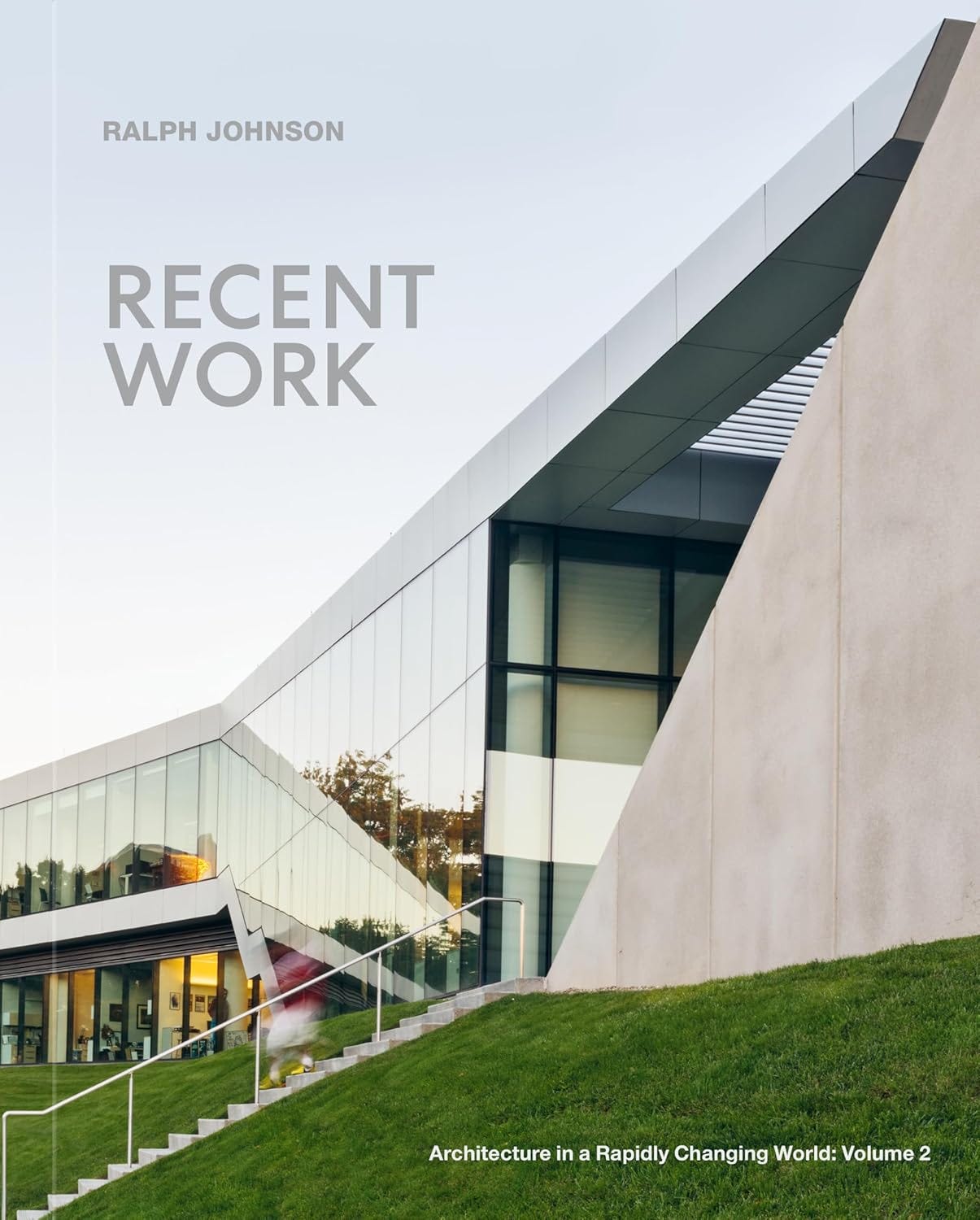
Although it covers roughly 40 years of work, the first volume is the slimmer of the two halves of Architecture in a Rapidly Changing World. The second volume, Recent Work, covers fifteen projects in considerable depth, with around sixteen pages given each project; most of them are built so they are documented in many photos alongside drawings and short descriptions. There is nothing groundbreaking in this presentation, but the quality of Johnson’s designs across the various types of buildings (education, medical, office, museums, transit) is remarkable, especially given how the often large projects still pay noticeably close attention to the human-scale, echoing the firm’s Crow Island School. With a relatively small selection of projects spanning from 2013 to present, the highlights are many (I’m partial to the smaller Chicago projects: Northtown Library and Apartments and Damen Green Line Station), while the omission of such controversial projects as Antilia Tower in Mumbai and the Iconic Tower and Central Business District in Egypt’s new administrative capital east of Cairo is hardly surprising.
The Egyptian project is nevertheless shown alongside an interview between Johnson and Ned Cramer that begins the second volume. The former editor of Architect magazine and, before that, curator at the Chicago Architecture Foundation (now CAC) also contributes an essay, “The Persistence of Modernism,” to the first volume, while Thomas Fisher, director of the Minnesota Design Center, has an essay, “Strange Tools,” in the second volume. (Fisher also penned an essay for Johnson’s previous monograph, discussed at the bottom of this newsletter.) These contributions help the monograph from sliding into a purely promotional production, though ultimately Architecture in a Rapidly Changing World is celebratory. After all, it comes just a few years after AIA Chicago awarded him the 2022 Lifetime Achievement Award. Furthermore, Johnson now shares design responsibilities at Perkins&Will with a “collective” of other partners, including Casey Jones, Andrew Frontini, and Chris Hardie—the last was elevated to firmwide design director just two months ago. No doubt, Johnson’s consistently high-quality designs have made Perkins&Will an appealing place for them and the thousands of other architects working at the firm.
Books Released This Week
(In the United States; a partial, curated list)
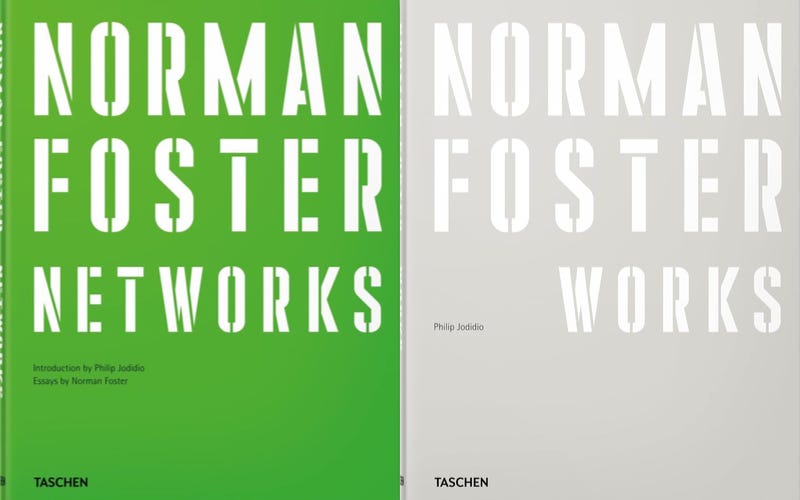
Norman Foster: Networks, by Norman Foster (Buy from Taschen / from Amazon / from Bookshop) — “In richly visual essays, written and curated by Foster himself, the internationally celebrated architect examines the interconnected ideas that shape his work.”
Norman Foster: Works, by Philip Jodidio (Buy from Taschen / from Amazon / from Bookshop) — “Encompassing [Norman Foster’s] entire oeuvre, and packed with unpublished sketches and handpicked images, this is a chronicle of six decades of brilliant, beautiful, boundary-pushing architecture.”
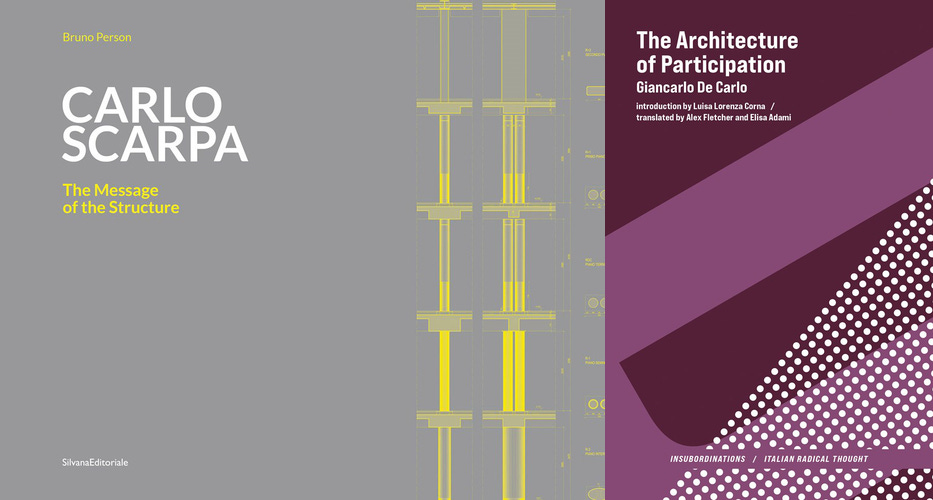
Carlo Scarpa: The Message of the Structure, edited by Bruno Person (Buy from Artbook/DAP [US distributor for Silvana Editoriale / from Amazon / from Bookshop) — “The first in-depth study on the structural design integral to Scarpa’s projects.”
The Architecture of Participation, by Giancarlo De Carlo (Buy from MIT Press / from Amazon / from Bookshop) — “Seminal texts by renowned Italian architect Giancarlo De Carlo on architecture, education, and anarchy.”
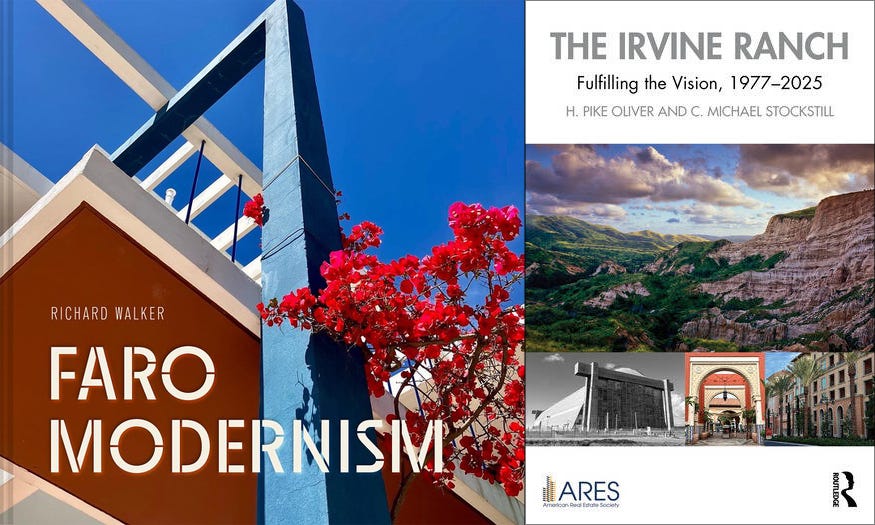
Faro Modernism: Buildings, Heritage, Culture, by Richard Walker (Buy from Rizzoli [US distributor for Batsford] / from Amazon / from Bookshop) — “A stylish exploration of one of the greatest cities for Modernist architecture in the world.”
The Irvine Ranch: Fulfilling the Vision, 1977-2025, by H. Pike Oliver and C. Michael Stockstill (Buy from Routledge / from Amazon / from Bookshop) — “The Irvine Ranch: Fulfilling the Vision, 1977‒2025 continues the story of the planning and development of the Irvine Ranch under a partnership of high-powered businessmen to the single ownership of Donald Bren.” (The authors’ first book, Transforming the Irvine Ranch: Joan Irvine, William Pereira, Ray Watson, and the Big Plan, was published in 2022.)
Full disclosure: As an Amazon Associate, AbeBooks Affiliate, and Bookshop.org Affiliate, I earn commissions from qualifying purchases made via any relevant links above and below.
Book News
Congratulations to Mark Lamster of the Dallas Morning News for winning the 2026 Pulitzer Prize Winner in Criticism “for his rigorous and passionate architecture criticism, using wit and expertise to amplify his opinions and advocate for city residents.” (Dallas Morning News/Pulitzer Prize) Book-wise, Lamster is author of the excellent 2018 biography The Man in the Glass House: Philip Johnson, Architect of the Modern Century.
Mark Alan Hewitt laments “The Trouble With Architectural Publishing” today, when the output of many publishers “is a trickle of what it was during the 1970s,” several “dependable publishers” are no longer in business, some publishers “charge prices that most students cannot afford,” and “subventions paid directly to the publisher [are needed] to offset publication costs.” (Common Edge)
Publishers Weekly gives a starred review to Ungrounding: The Architecture of Genocide, Eyal Weizman’s forthcoming book that “outlines how Israel uses environmental destruction as a tool of ‘ethnic cleansing’ against Palestinians.” (Publishers Weekly)
The 50th issue of the New York Review of Architecture comes with a supplemental Guide to New York City. (NYRA) Both the guide and the 50th issue feature covers by Madelon Vriesendorp.
“A New Book Charts the Career of Architectural Cartoonist Alan Dunn”: Alan Dunn: The Cartoonist as Architectural Critic, by Gabriele Neri. (Architectural Record)
“Out There Surveys 50 Architecture Practices Transforming Regional Cities and Small Towns.” (Architectural Record)
“The Royal Festival Hall is 75 years old – and I have played a small part in keeping it very much alive,” writes Eleanor Jolliffe about he new book, Royal Festival Hall: A Living Icon. (Building Design)
From architecture books to branding government websites: “Peter Arnell selected as America’s first chief brand architect” within the newly formed National Design Studio. (Dezeen) Worth adding here is that Arnell began his career in the early 1980s with a contract to produce, with Ted Bickford, a half-dozen architecture books for Rizzoli, including a monograph on Michael Graves, whom the two had previously worked for.
Wallpaper* spoke to photographers Francesco Russo and Luca Piffaretti, the creators of a new book that charts architecture in Ecuador: Ecuador: A Journey through Architecture, Culture and Land. (Wallpaper*)
“From concrete council housing to monumental theatres, [Owen Hopkins’ and Nigel Green’s] Brutalist London documents the myriad examples of brutalism in the UK capital.” (Dezeen)
From the Archives
If my quick research is accurate, the Book of the Week is just the third monograph on architect Ralph Johnson over his half-century-long career. The first, as mentioned above, was put out by Rizzoli in 1995 and the second, published by Oscar Riera Ojeda Publishers, came out sometime in the 2010s (the copyright is 2012 but Amazon indicates a 2015 release). I did not see the latter, Ralph Johnson of Perkins+Will: Recent Works, until around 2021, when I reviewed it on my blog. My text is copy-pasted below.
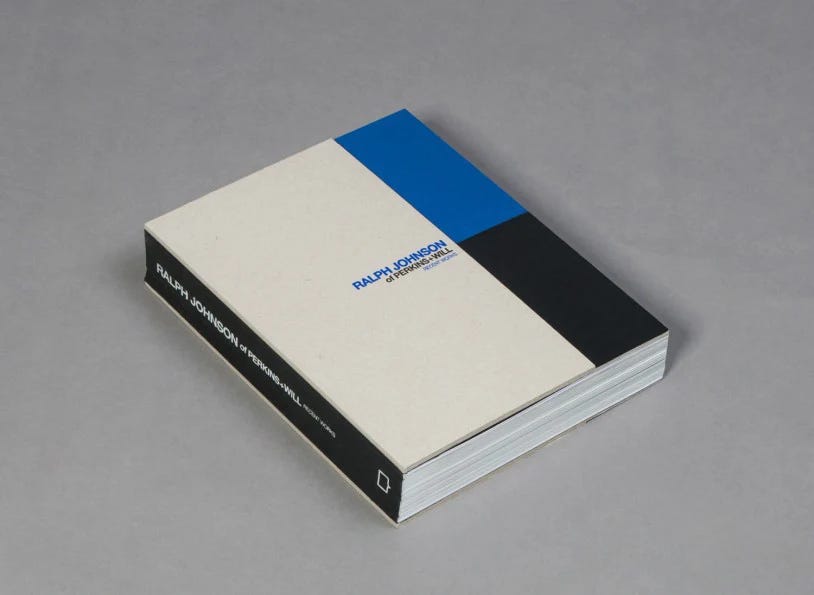
A couple decades ago, when I was working as an architect in Chicago and spending most of my days designing public schools, the firm’s monograph on Ralph Johnson of Perkins & Will was a near constant presence on my desk. Johnson was not the first architect at Perkins & Will to focus on schools and do them so well (it is the firm that designed Crow Island School with the Saarinens, after all), but the schools he designed in the 1990s were miles better than those of any other US firm at the time—including the one I worked at. But searching for schools from that era on Perkins & Will’s website is futile since the firm, like most these days, uses its website as a marketing tool rather than as a professional archive. Accordingly, magazines and monographs take on important roles as archives, particularly in regard to pre-internet creations.
If the monograph linked above (published by Rizzoli in 1995) captures the output of Ralph Johnson in the 1980s and 90s, then this most recent monograph, published by Oscar Riera Ojeda Publishers, does the same for his work at the start of the millennium. It compiles 35 built and unbuilt projects in seven typological “ing” chapters: Living, Learning, Working, Healing, Experiencing, Envisioning, and Traveling. Ironically, at least relative to my comments above, the Learning chapter is one of the shorter chapters, with just four projects; apartment buildings, offices, and museums seem to have preoccupied Johnson more in the first decade of the 21st century. Regardless, each of the four Learning projects—in Chicago, Tempe, Duluth, and overseas, in Luanda, Angola—is built and documented at length through the usual triumvirate of architectural monographs: photos, drawings, and text. Which means the four schools are actually spread across the same number of pages as the seven Working projects. Oh, and none of those four projects is found on Perkins & Will’s website, though two of them are on my blog, as is his firm’s hypothetical proposal to cap the Kennedy west of the Loop.
Yet, with nine years between the 2012 copyright of Ralph Johnson of Perkins+Will and now (the firm tweaked their branding, including a change to “Perkins&Will,” a couple years ago), it looks like it’s time for another monograph on Johnson. It could cover the buildings designed and completed since this monograph, whose most recent project is the Rush University Medical Center, completed in Chicago in 2012. Or perhaps it could go one step further and become a “complete works” and include everything Johnson has designed since he joined Perkins & Will in 1976, after working at Stanley Tigerman’s office (something I just learned in this book’s bio, not the bio on the firm’s website). Both the monographs and website clearly depict the consistent design quality of Johnson’s buildings, but having more than forty years of output in one place, in one book, would be valuable for at least the reasons mentioned above. Yes, this monograph’s back matter includes some snapshots of a few of Johnson’s pre-21st century buildings (plus, it should be noted, Chinese translations of the essays and projects descriptions), but they just further the argument for a more comprehensive treatment of his oeuvre in print.
Thank you for subscribing to A Weekly Dose of Architecture Books. If you have any comments or questions, or if you have your own book that you want to see in this newsletter, please respond to this email, or comment below if you’re reading this online. All content is freely available, but paid subscriptions that enable this newsletter to continue are welcome — thank you!
— John Hill
I really enjoyed this.
What stood out to me is how the two volumes seem to treat architecture not just as finished buildings, but as a long creative process — drawings, systems, references, collaborations, and the graphic language that helps organize all of it.
From Japan, I’m always interested in how architects and studios communicate their work through books and archives. Sometimes the publication becomes a second building: structured, edited, carefully detailed, and slightly heavier than expected on the shelf.
A beautiful reminder that architecture also lives in how it is documented.