
Wither Architectural Criticism?
Architecture Books – Week 31/2026

This newsletter for the week of July 27 looks at Future or Eclipse of Criticism, one of the books I highlighted in a recent roundup of small-sized Summer Reads. The book features essays and interviews stemming from a lecture series and symposium in 2023 that focused on the ways architectural criticism has shifted in recent years in the face of wider societal, economic, and technological changes. Similarly, the book from the archive is a text following from a conference, but one that took place in 2000, while the usual headlines and new releases are in between. Happy reading!
Book of the Week
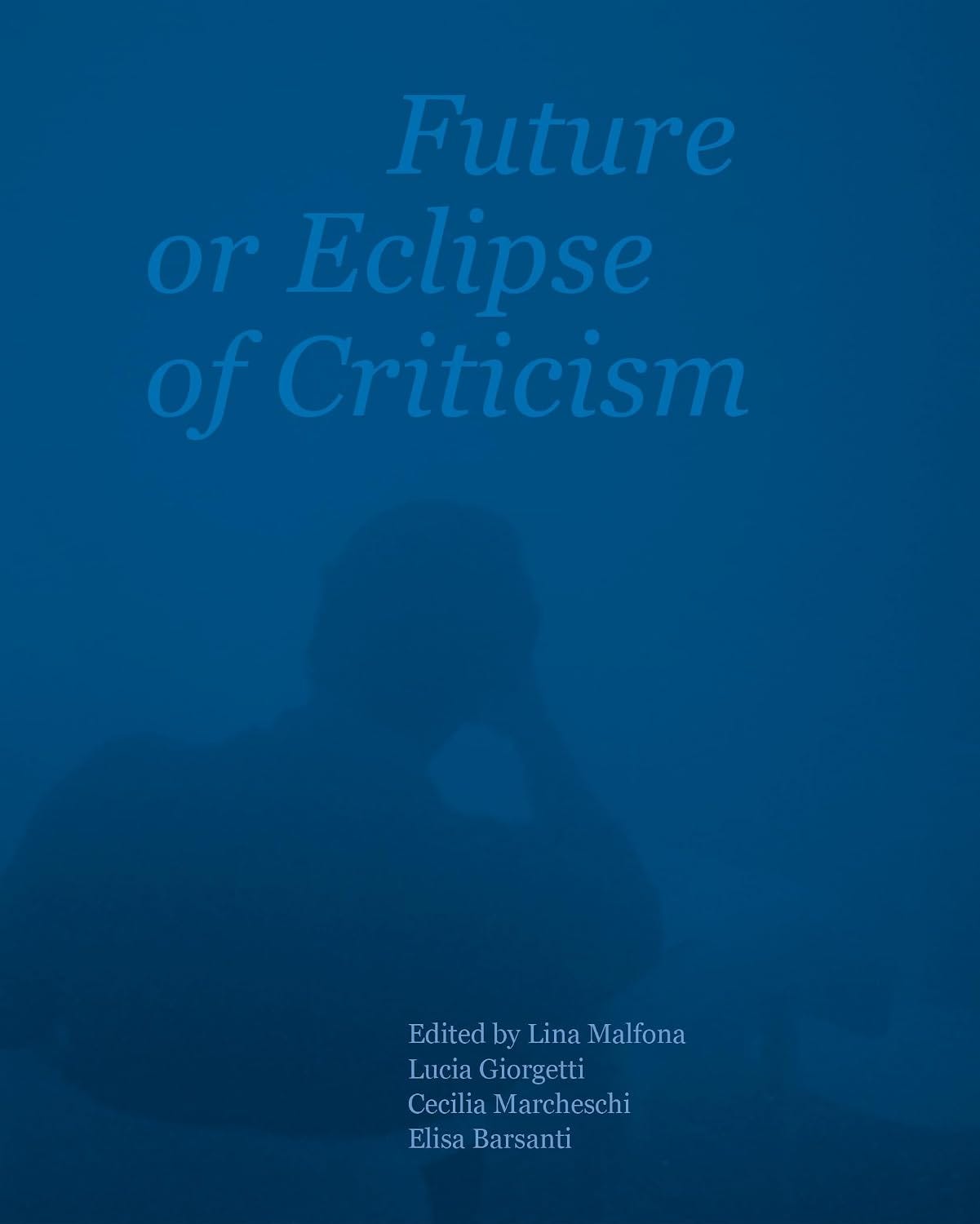
Future or Eclipse of Criticism, edited by Lina Malfona, with Lucia Giorgetti, Cecilia Marcheschi and Elisa Barsanti (Buy from Actar Publishers / from Amazon / from Bookshop)
One of the numerous sessions I attended at the UIA World Congress of Architects about a month ago was a talk by Mario Carpo on “Generative AI and the revival of creative imitation in the visual arts.” Carpo, author of The Second Digital Turn: Design Beyond Intelligence, Beyond Digital: Design and Automation at the End of Modernity, and other texts on the incorporation of digital tools into architectural practice, was a suitable for choice for the topic. Being a historian, he approached the topic with what seemed like tangents on art and architecture in Ancient Greece and the Renaissance, but in the end he used those references to show some parallels between human creativity and the AI equivalent: namely, that they both work via imitation and transformation. The biggest difference between the two forms of creativity—one that ensures AI is not an immediate existential threat to architects—is critique: architects can criticize, while AI cannot … at least, not yet.
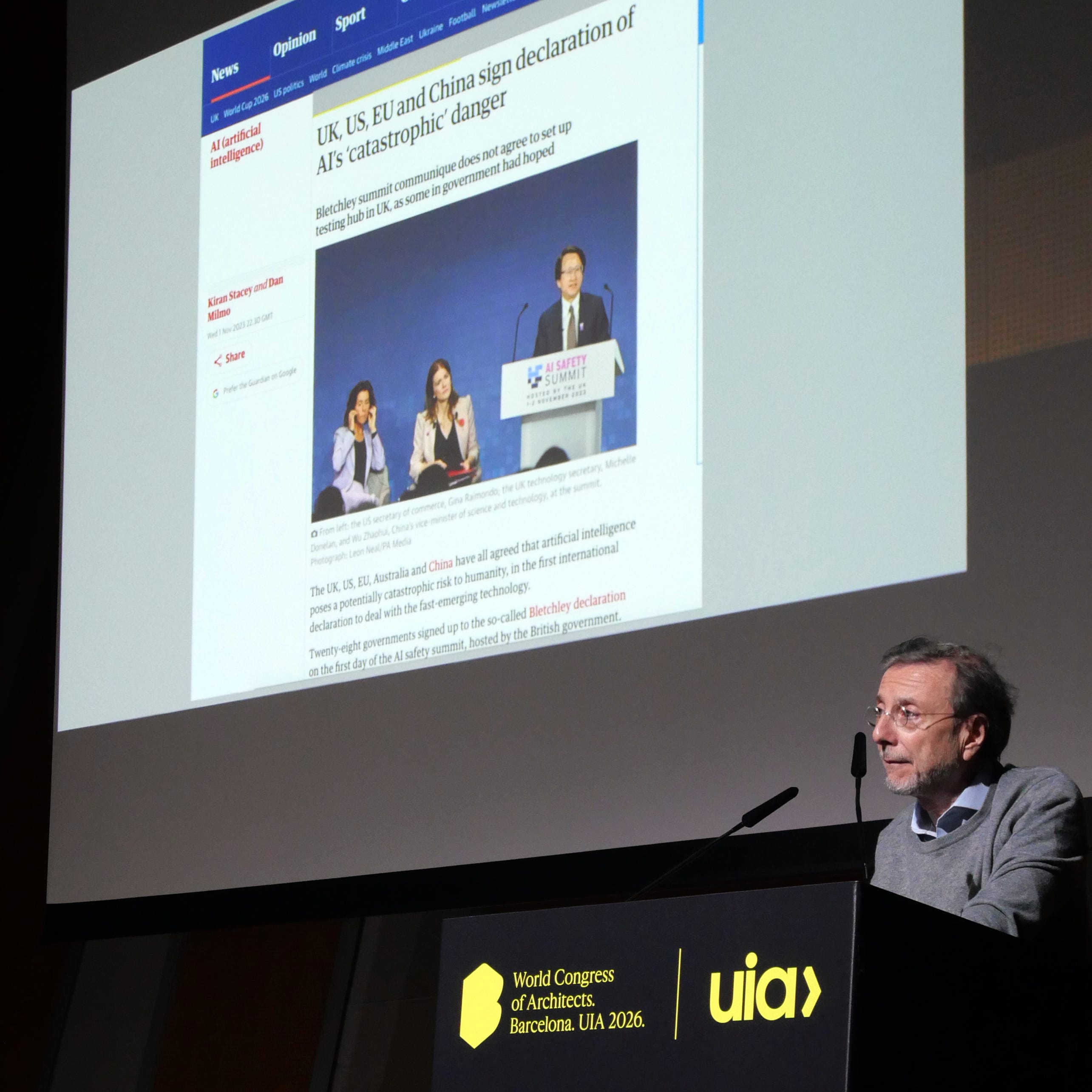
What Carpo did not address in his talk (at least not the talk I attended, as he did participate in others) was the current state of criticism in architecture. Are young architects and students of architecture today as well versed as previous generations in critique—both in critiquing built works they experience and in projects that they or others are working on? One could say that healthy architectural criticism—in journals, newspapers, online, in classrooms, wherever—has the benefit of giving students and architects the tools and perspective to better critique designs, ultimately making them better architects. If, as Carpo attests, criticism is necessary to make architectural practice stronger and more relevant in the face of AI, then criticism should be fostered in academia, publishing, and other areas of architecture, reversing the otherwise downward trend that is addressed in Future or Eclipse of Criticism.
“Future or Eclipse of Criticism” was both a lecture series at MAXXI in March and April of 2023 and a symposium at Università di Pisa on April 4, 2023. The book of the same name, released by Actar last month, features essays by, and interviews with, some of the participants in those two events, plus some texts by the editorial team. Paramount is, in the words of editor Lina Malfona, “the eclipse of the traditional architecture critic and emergence of new figures, such as the curator and the architecture journalist.”
Given the Italian context of the lecture series and symposium, this shift is examined through the lenses of Manfredo Tafuri and Bruno Zevi, but also via such intellectual voices as Roland Barthes and Bruno Latour. Latour’s ideas are indeed the basis for Albena Yaneva’s essay, “Putting Things Into Orbit: The New Style of Critique,” which argues for a form of criticism that is embedded within architectural practice and takes the many parts of the architectural process into account, echoing her 2009 book Made by the Office for Metropolitan Architecture: An Ethnography of Design. Cecilia Marcheschi and Elisa Barsanti, in their recap of the book, indicate that Yaneva’s “from the ground” approach “sparked tensions among participants” when she presented it at the symposium in Pisa.
The other essays are not nearly as controversial. The ones standing out to me are Marco Biraghi’s “The Destiny of Critique,” which argues for the importance of critical thinking but also the responsibility architectural thinkers have in keeping it alive; Cynthia Davidson’s “In Critical Condition,” which sees history as “the ecosystem in which criticism itself resides”; Lucia Giorgetti’s “Annotated Bibliography” that puts today’s criticism within the lineage of important 20th-century architectural criticism; and Joseph Bedford’s “On the Value of Criticism within Architectural Education.”
The last, subtitled “The Open Jury and the Liberal Democratic Promise of Post-War Pedagogy,” is most strongly aligned with my thoughts that began this review, in the way Bedford distinguishes between journalistic criticism and “metacriticism.” While the former type speaks to a broad audience, the latter is focused on academia, found in the dialogues between students and professors. It seems that those dialogues take on more pressing meanings with the rapidly expanding impact of generative AI on nearly every field today, including architecture. As such, Future or Eclipse of Criticism can be seen as a snapshot of architectural criticism at a time of transition, as it contends with the seemingly unavoidable onslaught of generative AI.
Books Released This Week
(In the United States; a partial, curated list)
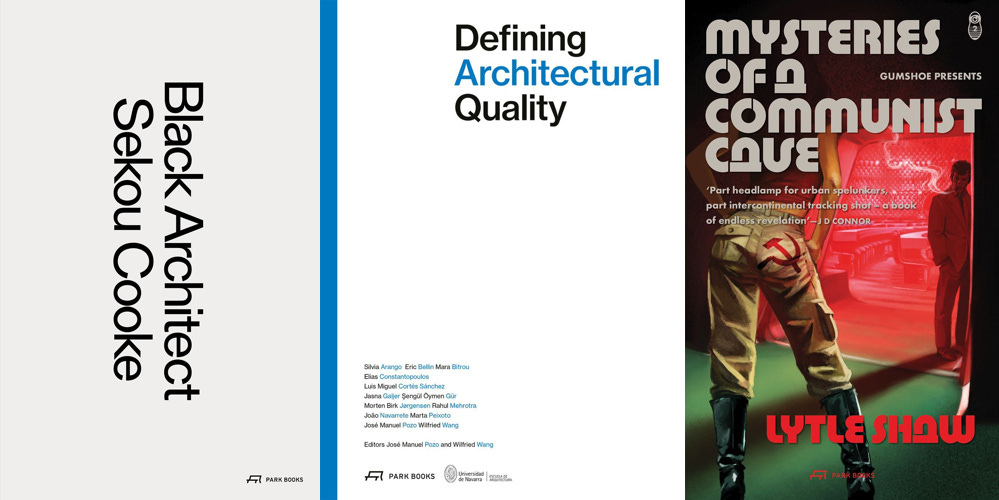
Black Architect, by Sekou Cooke (Buy from University of Chicago Press [US distributor for Park Books] / from Amazon / from Bookshop) — “A provocative and deeply personal investigation into the intersection of race, identity, and the built environment [that] blends memoir, cultural critique, and a series of candid conversations with leading Black practitioners to explore what it truly means to be a Black architect in America.”
Defining Architectural Quality, edited by José Manuel Pozo and Wilfried Wang (Buy from University of Chicago Press [US distributor for Park Books] / from Amazon / from Bookshop) — “While quantitative-technical evaluations of buildings abound internationally, the qualitative assessment of architectural works has so far been lacking. Defining Architectural Quality ranges from general observations and theories to case studies and lays a rigorous foundation for assessing works of architecture.”
Mysteries of a Communist Cave, by Lytle Shaw (Buy from University of Chicago Press [US distributor for Park Books] / from Amazon / from Bookshop) — “The second book in the Gumshoe series turns its investigative eye to Oscar Niemeyer’s unique construction for the French Communist Party in Paris, a microcosm of the shifting political and architectural landscape of the 1960s.”
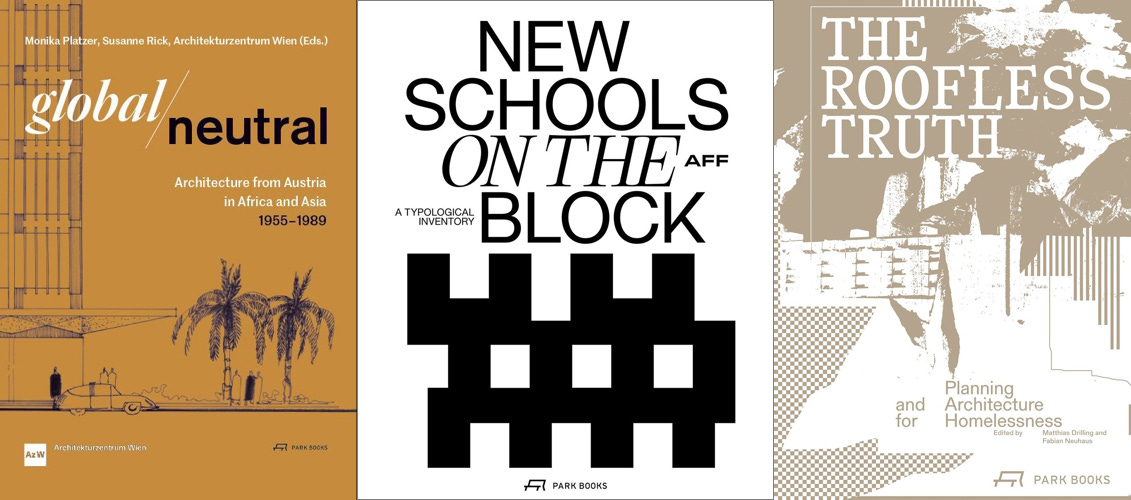
Global—Neutral: Architecture from Austria in Africa and Asia 1955–1989, edited by Monika Platzer, Susanne Rick and Architekturzentrum Wien (Buy from University of Chicago Press [US distributor for Park Books] / from Amazon / from Bookshop) — “Examines the complexity of postcolonialism through the lens of the work created by Austrian architects in African and Asian countries between 1955 and 1989, a period of global political upheaval during which numerous states gained independence from European colonial powers and international cooperation was increasingly marked by Cold War tensions.”
New Schools on the Block: A Typological Inventory, by AFF Architekten (Buy from University of Chicago Press [US distributor for Park Books] / from Amazon / from Bookshop) — “Surveys a decade of school building design by Berlin- and Lausanne-based AFF Architekten, a collective of architects, researchers, and crafts people that understand schools as spaces of identification as much as they are places of learning.”
The Roofless Truth: Planning and Architecture for Homelessness, edited by Matthias Drilling and Fabian Neuhaus (Buy from University of Chicago Press [US distributor for Park Books] / from Amazon / from Bookshop) — “The Roofless Truth brings together contributions by international researchers and practitioners from the fields of architecture, urban development and design, sociology, ethnology, social work, and education. The book highlights how spaces should be designed to offer protection, dignity, and opportunities for homeless people, and to facilitate encounters and interaction.”
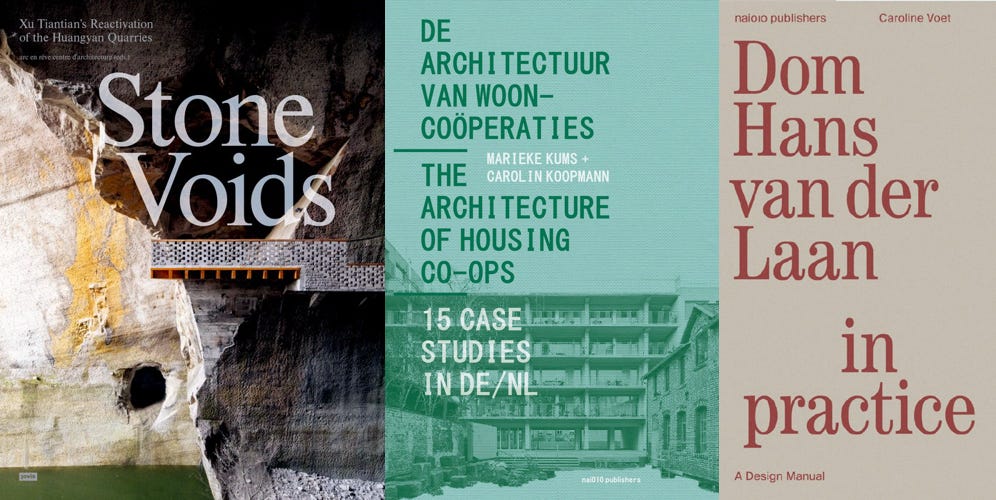
Stone Voids: Xu Tiantian’s Reactivation of the Huangyan Quarries, edited by arc en rêve centre d’architecture (Buy from Jovis / from Amazon / from Bookshop) — “From cavernous quarries carved by centuries of stone extraction to vibrant public spaces, Stone Voids tells the story of how architect Xu Tiantian and her studio DnA Design and Architecture transformed the Huangyan stone quarries in Taizhou, China, through her ‘architectural acupuncture’ approach.”
The Architecture of Housing Co-ops: 15 Case Studies in DE/NL, edited by Marieke Kums and Carolin Koopmann (Buy from Artbook/DAP [US distributor for nai010 Publishers] / from Amazon / from Bookshop) — “To stimulate interest in cooperative living, The Architecture of Housing Co-ops highlights successful examples from Germany alongside more recent Dutch projects, showcasing recent developments through detailed analyses, financial models, floor plans and interviews with designers and residents.”
Dom Hans van der Laan in Practice: A Design Manual, by Caroline Voet (Buy from Artbook/DAP [US distributor for nai010 Publishers] / from Amazon / from Bookshop) — “Dutch Benedictine monk and architect Dom Hans van der Laan (1904–91) built his practice around his concept of the ‘Architectural Space’ and a proportional system based on the 3:4 ratio. In this practical guide to his methodology, Caroline Voet uses his students' examples to update his principles for the 21st century.”
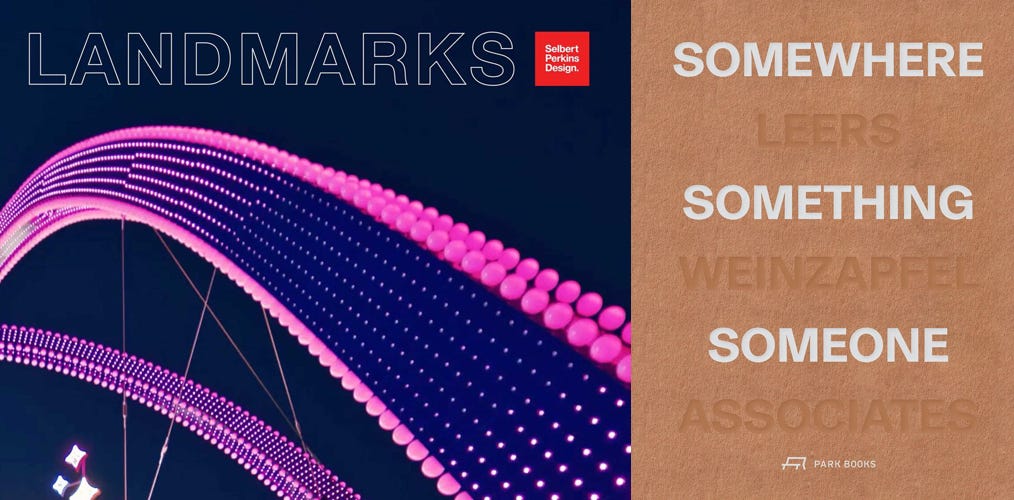
LANDMARKS: Every Place Has a Story. Every Story Has a Place, by Selbert Perkins Design (Buy from Visual Profile Books / from Amazon / from Bookshop) — “Great destinations around the world are evolving. Today’s global populations expect … more complex and highly rewarding experiences. LANDMARKS lets readers see 60 projects by Selbert Perkins Design in branding, wayfinding, and placemaking from diverse destinations around the world.”
Somewhere, Something, Someone, by Leers Weinzapfel Associates (Buy from University of Chicago Press [US distributor for Park Books] / from Amazon / from Bookshop) — “Leers Weinzapfel Associates present fifteen of their recent architectural projects since 2011 through photography, diagrams, drawings, and supportive texts and annotations. Somewhere, Something, Someone functions both as the book’s title and organizing principle.”
Full disclosure: As an Amazon Associate, AbeBooks Affiliate, and Bookshop.org Affiliate, I earn commissions from qualifying purchases made via any relevant links above and below.
Book News
“How to Turn Architecture’s Devolution Around”: Eva Hagberg reviews Reinier de Graaf’s latest book, Architecture Against Architecture: A Manifesto, ahead of the the July 25 gathering of the New York Architecture + Design Book Club when it was discussed. (Untapped)
“Another Architecture is Probable”: Read an excerpt from Antifascist Architecture, a new book by Daniel Jonas Roche and Andrew Santa Lucia. (Scratching the Surface)
“The Many Acts of Stages, David Kohn’s ‘Architect’s Book’”: Nishi Shah reviews the monograph on David Kohn Architects that features twelve volumes connected by wire binding. (World-Architects)
“Living in Tanizaki’s Shadows”: On the 140th anniversary of Tanizaki Jun’ichirō’s birth, Gregory Starr, a translator of In Praise of Shadows, “reflects on the work and its echoes in his own life in an old home on the Pacific coast of Japan.” (Nippon.com)
Furthermore is now accepting applications for Fall 2026 grants for “the publication of nonfiction books concerning the arts, history, and the natural and built environments.” Submission deadline is September 1, 2026. (Furthermore)
AJ reports on the death of Jeremy Melvin, who was a significant contributor to the development of World Architecture Festival (WAF) since its founding in 2008 but was also an oft-published author, including a monograph on FRS Yorke and …isms: Understanding Architecture. (Architects’ Journal)
“She’s just our type”: Irma Boom is “the experimental book designer who isn’t afraid to push boundaries—and crack some spines along the way.” (Monocle)
From the Archives
Although I did not attend either the “Future or Eclipse of Criticism” lecture series at MAXXI or the symposium at Università di Pisa a few years ago, one symposium I did find myself at many years ago was “Anything: Architecture at the End of the Millennium,” held at the Guggenheim in June 2000. The event was the tenth and final ANY event organized by Cynthia Davidson and her Anyone Corporation. One year later, MIT Press published Anything, though I didn’t get around to reviewing it on my blog until November 2004. Below is that review.
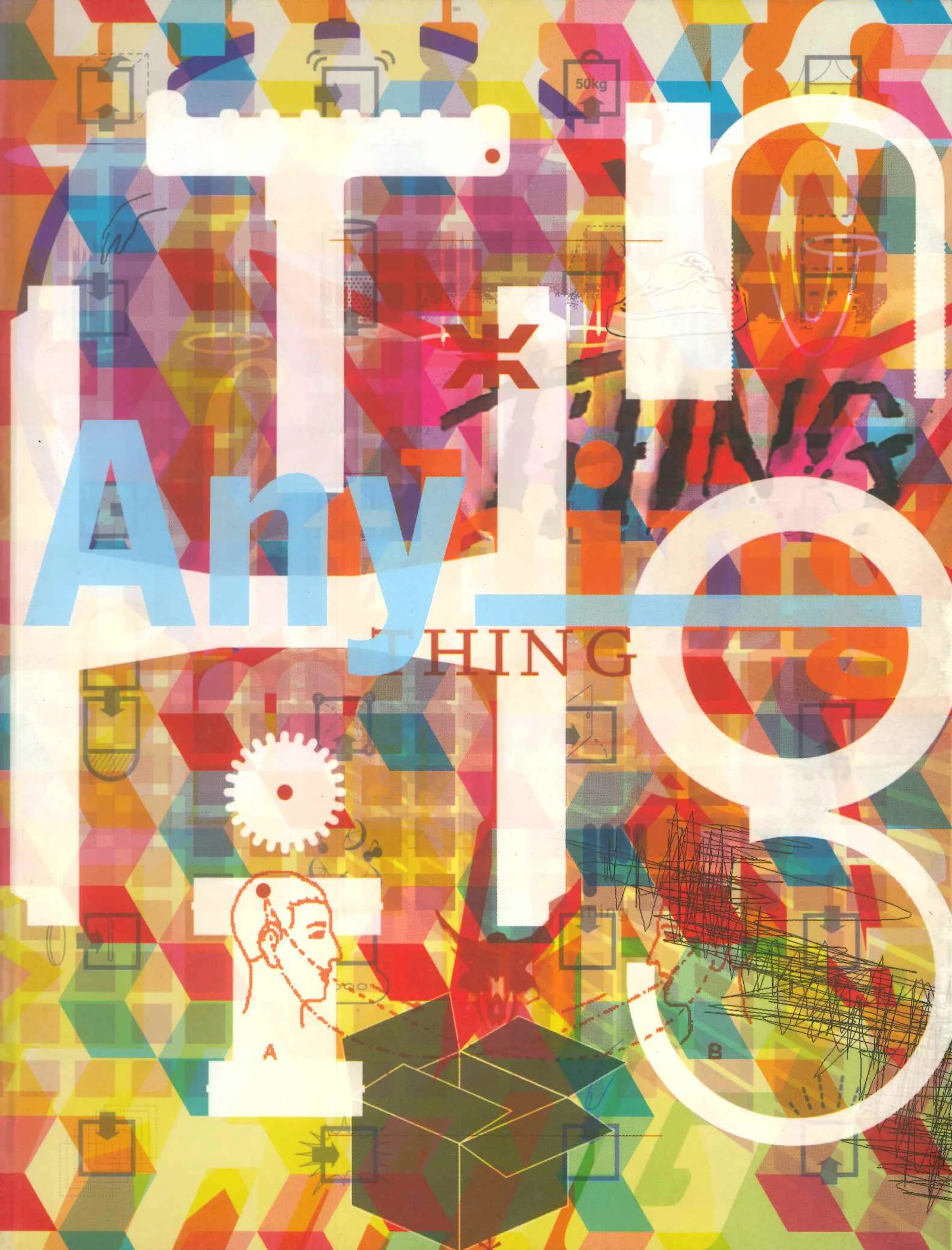
Anything marks the end of ten years of multi-disciplinary conferences and books on architecture and theory sponsored by Anyone Corporation, who recently resurfaced with Log. Spanning three days at the Guggenheim Museum in New York City in June 2000, I was fortunate enough to attend day two of the conference and symposium, featuring Jeffrey Kipnis, Steven Holl, Ben van Berkel, Jacques Herzog, Rafael Moneo, Elizabeth Diller, Zaha Hadid, and others. The book afforded me the opportunity to see what I missed the other two days, particularly the discussions that followed each half day’s prepared lectures. Its these transcribed discussions that make the book worthwhile, more argumentative, opinionated, and off-the-cuff than the lectures.

At the conference, the highlight for me was Gary Hill and Paulina Wallenberg-Olsson’s day-ending “Anything Intervention,” a live and pre-recorded, mixed-media work made specifically for the conference; my sentiment was shared by most of the panel members. Surprisingly the highlight of the book (without diminishing the accomplishments of the presenters) is the graphic design, carried out by 2x4, the popular New York-based firm also responsible for the 2D elements of Rem Koolhaas and OMA’s student center at IIT. 2x4 creates both macro and micro designs that create cohesion while also setting apart each piece as a unique part of the whole. This happens by subtly changing page colors throughout the book like a catalog of paints (blue-orange-green-pink-brown-purple-gray) and by laying out text and images differently for each contributor, in subtle ways as well.
Thank you for subscribing to A Weekly Dose of Architecture Books. If you have any comments or questions, or if you have your own book that you want to see in this newsletter, please respond to this email, or comment below if you’re reading this online. All content is freely available, but paid subscriptions that enable this newsletter to continue are welcome — thank you!
— John Hill